
Best Areas in Ho Chi Minh City for Foreign Property Investors (2026)
Where you buy in Ho Chi Minh City matters as much as what you buy. Different districts offer very different mixes of price, rental demand, lifestyle and foreign-eligible supply. This guide breaks down the best areas of Ho Chi Minh City for foreign property investors in 2026, part of our guide to buying property in Vietnam — and a companion to what foreigners can buy.
Table of Contents
Why Location Decides Your Return
For an investor, an area determines three things at once: capital-growth potential (infrastructure and demand), rental yield and tenant pool (proximity to jobs, schools and lifestyle), and foreign-eligible supply (how many quality projects still have room under the 30% quota). The best areas balance all three. Below are the districts foreign buyers focus on most.
Thu Thiem (Thu Duc City) — The New Financial District
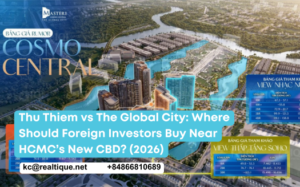
Directly across the Saigon River from District 1, Thu Thiem is Ho Chi Minh City’s planned new financial and business district. It hosts premium riverfront developments (Empire City, The Metropole, branded residences) and benefits from the Metro Line 1 and new bridges. Prices are high, but so is the long-term growth story — this is where much of the city’s future central business activity is heading, making it a favourite for capital-growth-focused foreign investors.
District 1 & Central Core
District 1 is the historic, high-end heart of the city — the strongest location for prestige, walkability and short-term rental demand from executives and tourists. Supply of new foreign-eligible units is limited and pricing is premium, but liquidity and tenant demand are the best in the city. Neighbouring District 3 offers a slightly more residential, leafy feel with strong central access.
District 7 (Phu My Hung) — The Expat Township
Phu My Hung in District 7 is Ho Chi Minh City’s most established planned township, long popular with expatriates, Korean and other international communities. Wide streets, international schools, parks and a self-contained lifestyle make it a top choice for family tenants — supporting steady rental demand. Prices are more moderate than Thu Thiem or District 1, offering a balance of yield and liveability that many foreign investors prefer.
Thao Dien (District 2 / Thu Duc)
Thao Dien is the leafy riverside enclave that has been the classic expat neighbourhood for years — villas, low-rise apartments, international schools and a strong cafe and dining scene. It commands premium rents from the international community and sits within the wider Thu Duc City growth area, close to Thu Thiem and served by the metro.
Binh Thanh & Emerging Areas
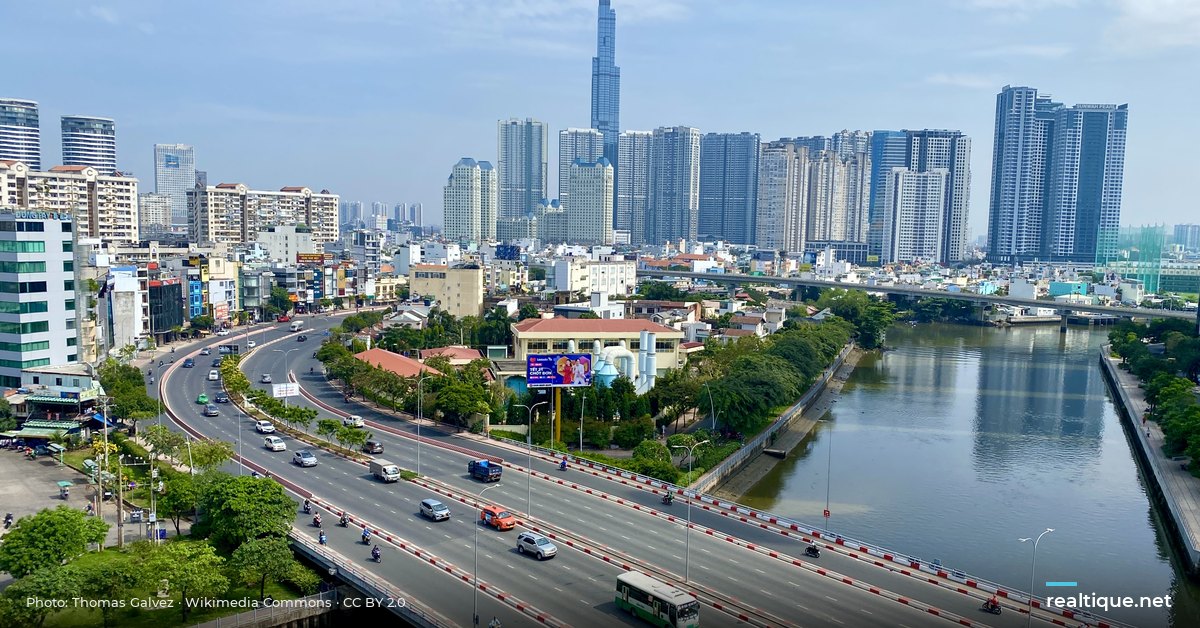
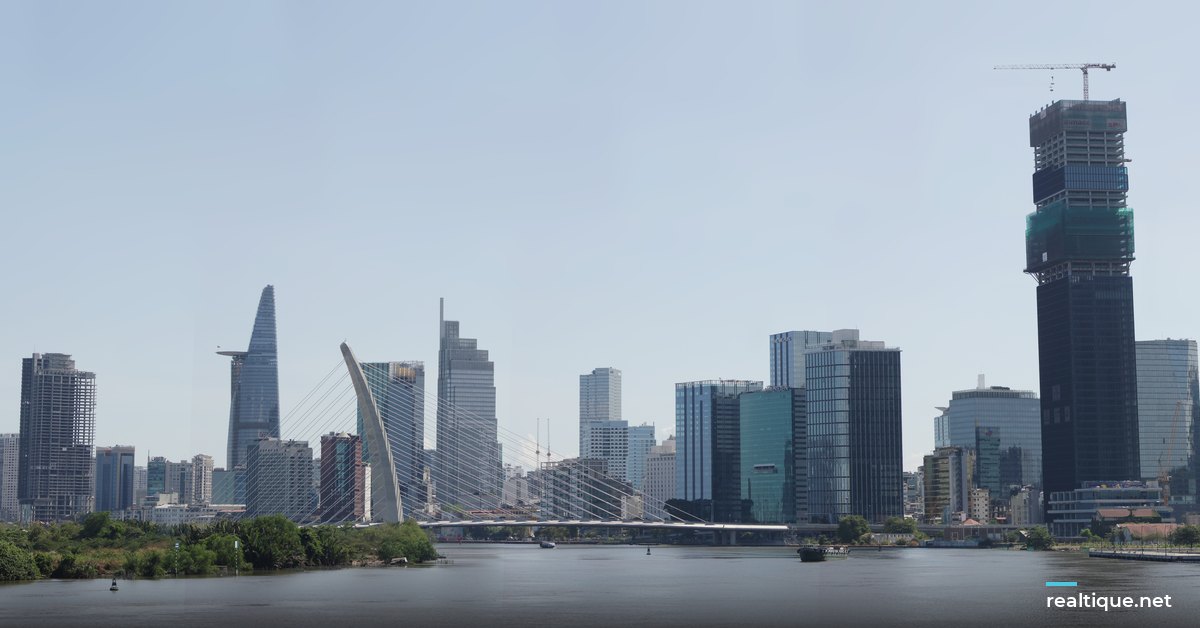
Binh Thanh (home to Landmark 81 and the Vinhomes Central Park development) offers riverside living with excellent connectivity to District 1, at price points below the very top districts — attractive for yield. Further out, areas along the metro line and around new infrastructure are worth watching for value and growth as the city expands eastward.
The Outer Ring: Four Directions Where Commute Time Beats Distance
Every area above sits inside the historic centre or its immediate edge. But the fastest-changing part of the market in 2026 is the ring beyond them — and it is the part most foreign buyers dismiss on the wrong criterion.
On 2 September 2026 Savills Vietnam made the argument plainly: for years the most valuable property sat in the centre, but as the transport network completes, the best-connected property becomes the most valuable. Ho Chi Minh City has now identified roughly 250 priority investment projects for 2026–2030, including Ring Road 3, Ring Road 4, Metro Line 2, the Can Gio rail link and the connections to Long Thanh International Airport.
The practical consequence for a buyer: the market still prices by distance, while the lived experience has already been repriced by time. That gap is where value sits — and also where an impatient buyer overpays for a promise.
Four directions, and the figure each developer actually publishes
| Project | Direction / corridor | Published connectivity figure | Indicative price | Foreign ownership |
|---|---|---|---|---|
| TT Genesis | South — Nha Be, Nguyen Huu Tho axis | ~7–8 km to District 1 via Nguyen Huu Tho and Kenh Te bridge | On request | Not yet announced |
| MT Eastmark City | East — Thu Duc, Long Thanh–Dau Giay expressway | ~20 min to the An Phu – Mai Chi Tho interchange; ~30 min to Long Thanh airport (future) | ~VND 55–66 m/m² (net area) | On the HCMC approved list (13 Mar 2026) |
| SkySOLIS | North — Lai Thieu, Highway 13 | ~35 min to central Saigon; ~2 min to the planned metro stop | ~VND 58–59 m/m² | Permitted, per developer Q&A |
| Green Skyline Di An | North — Di An, Highway 1K | Frontage on Highway 1K; amenity radius quoted at 5 / 10 / 25 min | ~VND 65–76 m/m² (VAT included) | Permitted (official letter 3357, announced 23 May 2026) |
⚠️ How to read this table. The four connectivity figures are not directly comparable, because each developer publishes against a different destination: TT Genesis quotes a distance to District 1, MT Eastmark quotes times to an interchange and to an airport that is not yet operating, SkySOLIS quotes time to the centre, and Green Skyline quotes an amenity radius. The price column has the same problem: MT Eastmark prices on net (carpet) area, while the Green Skyline figure is VAT-inclusive. Convert both to a single basis before comparing — this is the single most common error when buyers build their own spreadsheet.
What this means for a foreign buyer specifically
Foreign eligibility, not price, is the first filter out here. Under Vietnamese housing law a foreign individual can only buy in a project that has been formally approved, so the ring narrows quickly:
- Green Skyline Di An is the clearest case: on the approved list under official letter 3357, announced 23 May 2026, and the developer applies the same price to foreign and Vietnamese buyers — not universal in this market.
- MT Eastmark City is on the list approved by the HCMC People’s Committee under the letter and appendix issued 13 March 2026. Being listed is the precondition; the remaining quota must still be checked unit by unit.
- SkySOLIS is open to foreign buyers per the developer’s own Q&A documentation.
- TT Genesis has not published its foreign-ownership status. Have it confirmed in writing before any deposit rather than assuming.
Viet Kieu who still hold Vietnamese nationality are in a different position entirely. Under the 2024 Land Law, in force from 1 January 2025, a person who retains Vietnamese nationality has the same housing and land rights as a domestic citizen — meaning the 30% per-building cap does not apply to them. This is the single most misunderstood point in the outer ring, so establish your nationality status before shortlisting.
The counter-argument, stated fairly
Infrastructure is a catalyst, not a guarantee. In the same week, HoREA chairman Le Hoang Chau warned that land near a transport project does not automatically appreciate; durable value appears only when infrastructure brings jobs, services and real economic activity with it. Three questions worth answering in numbers before committing:
- What state is the infrastructure actually in — operating, under construction, or still only planned? Those are three very different risk levels, and sales material tends to blur them. The Long Thanh–Dau Giay expressway beside MT Eastmark is operating; Long Thanh airport is not.
- Have you driven the route at peak hour? Every “x minutes” in a brochure assumes favourable conditions. One Tuesday morning at 7:30 tells you more than any masterplan.
- Are there jobs and services there yet, or only housing? The northern corridor (Di An, Lai Thieu) has an established industrial base and proven rental demand; some other pockets have infrastructure arriving ahead of the economy.
One more 2026-specific variable: mortgage rates commonly run as high as 13%, with 12-month deposit rates up materially. If you are using leverage, model the cash flow at 13% rather than at a first-year promotional rate — high capital cost is why a decision that is right on location can still be wrong on timing.
For the full Vietnamese-language analysis of these four corridors, see Bất Động Sản Vùng Ven 2026. Project-level detail in English: MT Eastmark City · Green Skyline Di An · SkySOLIS Lai Thieu · TT Genesis.
Sources for this section: Savills Vietnam via Nhip song thi truong / CafeF, 2 September 2026; HoREA via CafeF / VTC News, 2 September 2026; project figures from Realtique’s own project coverage, September 2026. Prices and travel times are developer-published indicative figures and change between sales phases; infrastructure milestones that have not yet happened are plans, not commitments.
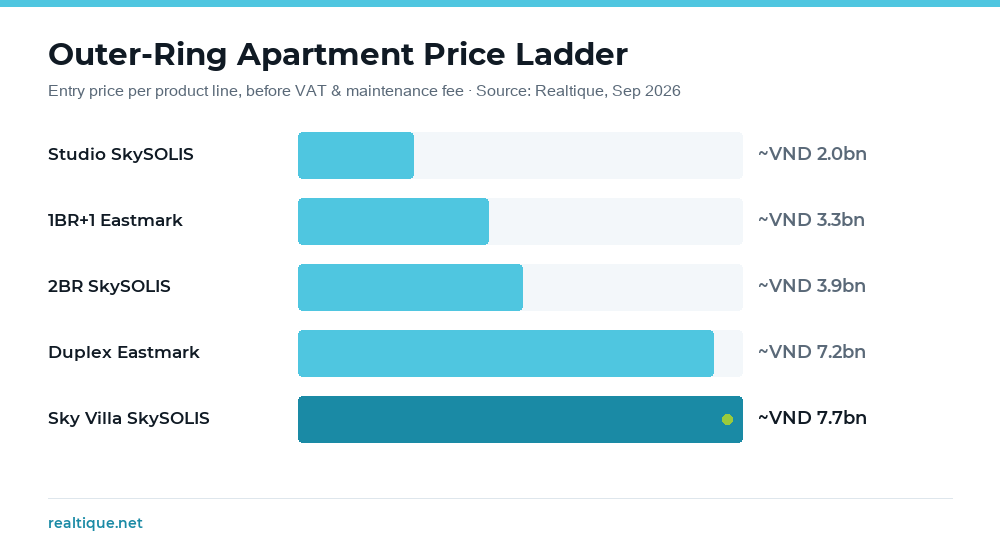
Graphic: Realtique · Data: developer indicative price lists, September 2026
Quick Comparison
| Area | Best for | Price level |
|---|---|---|
| Thu Thiem | Long-term capital growth | High |
| District 1 / 3 | Prestige, liquidity, short-let | Premium |
| District 7 (Phu My Hung) | Family rentals, balance | Moderate |
| Thao Dien (D2) | Expat rentals, lifestyle | High |
| Binh Thanh | Yield + connectivity | Moderate–High |
| Nha Be (South, TT Genesis) | Short distance to District 1, new supply | Moderate |
| East Thu Duc (MT Eastmark) | Expressway + Ring Road 3 access | Moderate |
| Lai Thieu (Highway 13, SkySOLIS) | Entry price, industrial rental demand | Entry |
| Di An (Highway 1K, Green Skyline) | Foreign quota clarity, amenities | Moderate |
What to Look For in an Area
Whatever district you choose, weigh: infrastructure in progress (metro, bridges, roads), tenant demand drivers (offices, schools, lifestyle), foreign-quota availability in the specific projects you like, and your own goal — capital growth or rental yield. A local agent who knows current quota status across projects saves you from chasing units you cannot actually buy.
Beyond Ho Chi Minh City: Da Nang
If lifestyle and holiday-let yield appeal more than a big-city base, Da Nang on the central coast offers beachfront and resort-style condominiums at lower entry prices, popular with holiday-home and short-stay rental investors. It is the main alternative many foreign buyers consider alongside Ho Chi Minh City.
Where Viet Kieu can own — Ho Chi Minh City to the coast
Wherever you are in the journey, here is where Viet Kieu buy — central Ho Chi Minh City to the coast:
Your status sets the ownership type: a Viet Kieu with Vietnamese residency or citizenship owns freehold, like a local (any project below). A Viet Kieu who is a foreign national buys within the 30% foreign quota or via long-term lease (the first three groups).
District 1 — Ho Chi Minh City
- One Central Saigon — Ritz-Carlton branded, foreign quota available
District 2 — East of Ho Chi Minh City
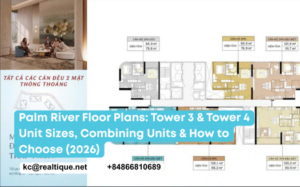
- BOOKINGPalm River — riverside, booking stage since 09/2026 (foreign quota not yet confirmed)
- SELLINGThe Global City — foreign quota available
- SELLINGGladia Heights by Keppel Land — foreign quota available
- RESALEDiamond Island — handed over, buy from current owners
- RESALEThao Dien Green — foreign-quota unit, resale
Coastal (foreign-eligible)
- Nobu Residences (Da Nang) — long-term lease resort
- Mandarin Oriental (Da Nang) — freehold for Vietnamese residents; long-term lease for non-residents
✓ Also yours freehold — if you hold Vietnamese residency or citizenship
These sell to domestic buyers (no foreign quota), but a Viet Kieu with residency owns them freehold, like a local:
- SELLINGBeachtro Tower — Blanca City, Vung Tau (final sea-view tower)
- SELLINGRung Phuong — Eco Retreat, Long An (low-rise, education hub)
- Haus Coastal — Quang Ngai (94ha coastal township)
Not sure which fits your status? Confirm your eligibility and live availability with a Realtique advisor — contact us or email [email protected].
Frequently Asked Questions
1. Which HCMC area is best for foreign investors?
There is no single answer — Thu Thiem for growth, District 1 for prestige/liquidity, District 7 and Thao Dien for rental balance. Match the area to your goal.
2. Where do expats rent most?
District 1, Thao Dien (D2) and Phu My Hung (D7) have the deepest expat tenant pools.
3. Are these areas foreign-eligible?
Many projects are, but you must confirm each building’s 30% quota. See the quota guide.
4. Is Da Nang a good alternative?
Yes for lifestyle and holiday-rental buyers, at lower entry prices than HCMC.
Growth vs Yield: Matching Area to Goal
Foreign investors broadly split into two camps, and the best area differs for each:
- Capital-growth focus — you want the value to rise. Prioritise areas riding major infrastructure and a strong future story: Thu Thiem and the Thu Duc City growth corridor, plus prime District 1.
- Rental-yield focus — you want steady income. Prioritise deep, reliable tenant pools: District 7 (Phu My Hung), Thao Dien and Binh Thanh, where expat and professional demand is consistent.
Many buyers want both — in which case a well-located apartment near the metro in an established area is the pragmatic middle ground. Decide your priority before you shortlist, and the area choice becomes much clearer.
New Launches vs Resale, by Area
In fast-growing areas like Thu Thiem, most foreign-eligible stock is new / off-the-plan — you buy into the growth early but wait for handover. In established neighbourhoods like Thao Dien or Phu My Hung, more inventory is resale from existing (often foreign) owners, letting you buy a finished, rentable unit immediately. Your area choice therefore also shapes whether you are buying a future asset or immediate income.
Getting the Timing Right
Across every area, the foreign 30% allocation in the best towers goes first. If a specific district and project matter to you, register interest early and be ready to move. Waiting for ‘the perfect moment’ often means the foreign quota in your first-choice building is already gone — so shortlist a primary target and a backup in a comparable area.
The Role of a Local Agent in Choosing an Area
Area data online only takes you so far. Prices, rental demand and — crucially — foreign-quota availability shift project by project and month by month. A local buyer’s agent who actively tracks the market can tell you not just which district suits your goal, but which specific towers in that district still have foreign allocation, what genuine rents are achieving, and where new infrastructure is about to lift values. Because agent commission is typically paid by the seller or developer, this expertise usually costs a foreign buyer nothing extra — while saving you from committing to an area, or a unit, that does not actually fit your strategy or is not even eligible.
Final Word: Buy for Your Goal, Not the Hype
Every district has its advocates, but there is no universally ‘best’ area — only the best area for your objective. Anchor the decision to what you actually want: growth, yield, lifestyle, or a blend. Confirm the numbers, confirm the quota, and choose the area that serves that goal. Done that way, Ho Chi Minh City offers international investors a genuinely deep menu of options.
How Realtique Helps
Realtique matches international investors to the right district for their budget and goal, then shortlists verified, foreign-eligible projects with confirmed quota availability. We know which towers still have foreign allocation and where the next growth is heading — so you invest where it counts. One English-speaking team, on the ground in Ho Chi Minh City.
Which Area Fits Your Goal? Ask Realtique
Realtique guides international investors end to end — eligibility, quota, due diligence, legal transfer and the pink book.
Start today. Leave your name and email — a Realtique specialist will reach out. Or email [email protected].

KC and the Realtique team guide international investors through buying property in Vietnam — safely and in full compliance, from eligibility to the pink book.