
Masteri Cosmo Central Insider’s Decision Guide 2026 — Expert POV for Qualified Buyers
By the time you’re reading article #11 in our Masteri Cosmo Central series, you already know the price schedule, the floor plans, the developer track record, and the amenity density. What you don’t know is what Realtique’s top experts say behind closed doors when a serious buyer asks, “Is this project actually worth it?”
This is that article. A synthesis of internal training sessions with Realtique’s top-performing Real Estate Expert, Mr. KC Pham, cross-checked against 10 prior articles and official Masterise Homes sales policy. It’s written for the buyer who’s qualified, who’s done the homework, and who now needs the expert-POV framework to pull the trigger — or to walk away with clean reasoning.
Who this article is for: High-net-worth Vietnamese buyers, foreign residents relocating to HCMC for IFC-ecosystem work, and offshore investors evaluating a 5–10 year hold. If you’re still deciding whether to consider Masteri Cosmo Central, read our pillar review first. If you’re ready to decide how to enter, this guide is for you.
Table of Contents
Why Standard Real-Estate Analysis Fails at Masteri Cosmo Central
Every comparison you’ve run probably uses the same toolkit: price per m², distance to CBD, developer reputation, handover year, rental yield. For mature markets these tools work. For Masteri Cosmo Central they produce misleading answers — because the product sits in a shifting location, not a stable one.
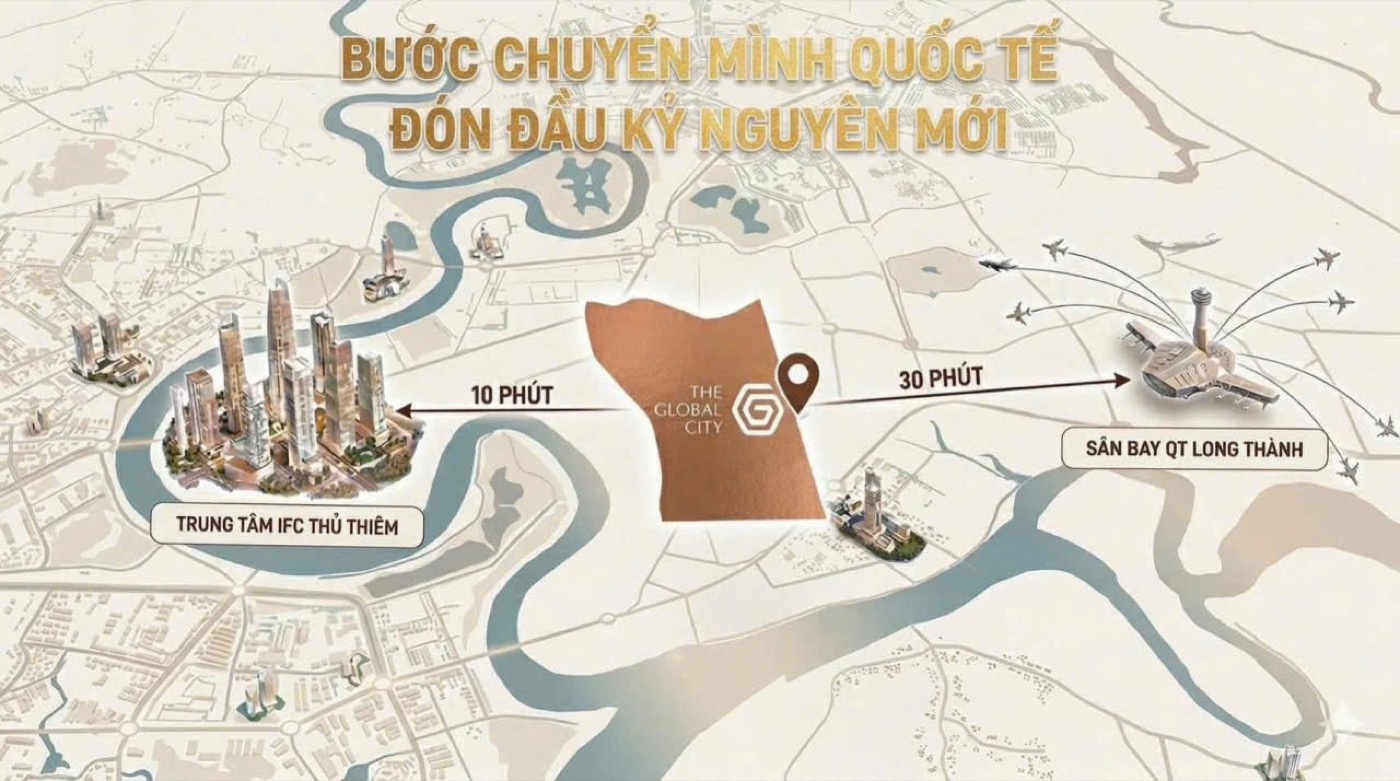
Mr. Le’s framing, delivered to Realtique’s senior-team training: “It’s not a product; it’s a position. Real estate equals location, location, location — but locations change.” Ho Chi Minh City’s centre has itself shifted over two centuries — from Cholon (District 5) in the 1800s, to Saigon-proper (District 1) in the 20th century, and now east across the Saigon River as Thu Thiem comes online. What is District 1 today is becoming Thu Duc — specifically Thu Thiem IFC’s gravitational radius. CT4 sits inside that radius, five years before the centre fully relocates.
This means three standard assumptions break:
- Comparable pricing is irrelevant. There is no other project in Vietnam pairing (a) IFC proximity, (b) green certification, (c) Masterise-tier governance, (d) Metro Line 2 access, and (e) Foster+Partners retail. You’re not buying a better 1BR — you’re buying the only 1BR that exists in this category.
- Yield-first analysis under-counts the asset. Rental yield (5–6% projected, Year 3+) is real but is secondary to the appreciation mechanism: ecosystem activation adds value structurally, not speculatively.
- Short-hold assumptions destroy the thesis. Buyers calibrated to 2–3 year flips read this project as overpriced. Buyers calibrated to 5–10 year holds read it as underpriced. Both reads are internally consistent. The question is which calibration matches your capital.
- IFC demand is pre-existing, not speculative. 12,000 financial professionals are already being recruited with 5–10 year tax exemptions.
- Masterise Homes = state strategic developer. Only 3 developers carry this status nationally (Vinhomes, Sun Group, Masterise). Project completion risk minimal.
- Metro Line 2 on doorstep. HCMC's signature transit line (26km: airport → CBD → Thu Thiem). Downside protection even if IFC slows.
- Green certification (LEED/Edge) target. Institutional capital (pension funds, insurance) legally required to hold ESG assets — guaranteed liquidity floor.
- Foster+Partners on retail + 3-tier anchor (Apple Store probability high). A single flagship tenant locks in traffic for 20+ years.
- Rental yield lag Years 1–2. IFC workforce migrates in waves — full yield (5–6%) activates Year 3+.
- No direct comparables in market. Buyers lack reference points — psychological friction in price acceptance.
- Vietnamese-only bank financing. Foreign buyers cannot access VN mortgages by law — cash/overseas financing only.
- 5–10 year hold required. Appreciation compounds with ecosystem activation — short-flip (< 3 years) unlikely to capture full return.
- Phase 2 pricing mechanics mean Phase 1 window is narrow. Sell-out velocity of 2BR mid-floors drives price-up — buyer decision fatigue costs real money.
The Five Structural Advantages (Ranked)
Not every selling point is equal. Ranked by structural defensibility (i.e., how hard it would be for a competitor to replicate), these are the five advantages that matter most:
1. Thu Thiem IFC Is the Demand Engine — and It's Already Activating
Every developer claims “proximity to CBD.” Masteri Cosmo Central claims something more specific: proximity to a $100 billion AUM target that the Vietnamese state has committed to delivering.
Run the math. Singapore manages $3.2 trillion in AUM with roughly 4–5 financial professionals per billion managed. Vietnam’s stated target is $100B in 5–10 years, implying 8,000–12,000 financial professionals need to physically arrive in HCMC within that window. Tax policy front-loads this migration: incoming experts receive 5–10 year income-tax exemptions, cutting effective tax from 35% to near zero.
These professionals earn $300,000+ annually (Singapore-comparable). They bring partners, enrol children in international schools, lease or buy homes within 15 minutes of the IFC. Of the projects within that radius, CT4 is the only one meeting the governance / international-standard criteria this demographic expects.
KC Pham: “Finance pulls commerce, commerce pulls lifestyle, lifestyle pulls capital.” The sequence is not aspirational — it’s the standard ecosystem pattern observed in Singapore, Hong Kong, London, and (most recently) Dubai. Thu Thiem IFC is the only such programme currently under construction in Vietnam.
2. Green Certification Creates a Liquidity Floor
LEED and Edge certification are commonly treated as marketing labels. In institutional capital markets they are gating criteria. Pension funds, sovereign wealth funds, and insurance companies have ESG mandates that force allocation into certified assets. When global markets correct, these institutions remain forced buyers — which is exactly when distressed sellers need them.
Historical reference: during the 2008–09 downturn, LEED-certified properties in the US held value approximately 15–20% better than comparable non-certified assets. The mechanism was not demand from owner-occupants; it was forced institutional allocation.
Mr. Le’s phrasing to his team: “Green certification isn’t marketing. It’s how the state steers the economy.” For a Masteri Cosmo Central buyer, this is downside protection. You do not need to actively manage it; it activates automatically the moment the market stresses.
3. Metro Line 2 Adjacency — "The Mercedes of HCMC Transit"
Metro Line 2 is HCMC’s 26-kilometre signature line connecting Tham Luong → Tan Son Nhat Airport → Ben Thanh CBD → Thu Thiem IFC → Long Thanh International Airport (via extension). It is the single most visible infrastructure project to international residents and corporate relocators — the system they see in advertising, use daily, and associate with Vietnam’s development curve.
Mr. Le uses a deliberate metaphor: “Living at Global City is like owning a Mercedes while others own Toyotas.” The point is not snobbery — it’s that residents here get two premium transit options (Line 2 external + Line 5 internal), plus pedestrian access to the IFC canal boardwalk. Competing projects offer one at best.
If the IFC thesis slows, the metro thesis still holds. That asymmetry — upside from IFC, floor from metro — is why this advantage compounds.
4. Masterise Homes Is State-Strategic, Not Commercial
There are three developers in Vietnam designated “national strategic” in practice: Vinhomes, Sun Group, and Masterise Homes. This status is informal but consequential — it governs land access, regulatory alignment, and government support in crisis.
The contrast Mr. Le draws: smaller developers have built visually impressive projects (including 200-storey Opera-branded buildings) that failed to clear Phase 2 pricing because market confidence in completion was insufficient. Masterise does not face this risk class. Both the government and institutional lenders extend preferential liquidity because project failure is disallowed at the policy level.
For a buyer, this translates into: lower completion risk, lower regulatory tail risk, stronger resale network (Masterise maintains brokerage relationships for owned stock), and access to the developer’s international-buyer channel on exit.
5. Foster+Partners Retail + Apple Store Probability
The 123,000m² shopping mall at The Global City is designed by Foster+Partners — the firm behind Apple Park, 30 St Mary Axe, and several Apple flagship stores. This is not coincidence. Apple operates a deliberate checklist for physical store placement: international architecture credibility, logistics proximity (Long Thanh Airport), A-grade retail certification, demographic diversity. The Global City meets all four criteria.
Vietnam currently ranks #3–4 globally in iPhone sales volume with zero physical Apple Stores. That gap is closing. The Global City’s probability of hosting Vietnam’s first Apple Store flagship is, by our estimate, 80%+. A single anchor tenant of this calibre locks in retail gravity for 20+ years and adds a measurable premium to adjacent residential stock.
This advantage is independent of — and additive to — the IFC and metro theses. Even if IFC underdelivers and metro slows, an Apple Store plus Foster+Partners retail anchors residential pricing on consumer-demand grounds alone.
Hidden Truths the Marketing Won't Tell You
Three facts Mr. Le emphasises in expert training that never make it to the brochure:
Truth #1: Phase-up is driven by velocity, not calendar
Most buyers assume Phase 1 pricing runs on a schedule — “Phase 2 opens September 2026,” etc. Reality: phase-up is triggered when a unit type hits approximately 70% sold. When 2BR mid-floors clear 70%, the next pricing band opens at +8–12% without announcement. By the time a “Phase 2” is publicly acknowledged, Phase 1 buyers of the best units have already captured the delta.
Velocity data from comparable Masterise launches: top-demand units (2BR, mid-to-high floors) typically clear 60–90 days post-launch. Secondary demand (1BR + 3BR) clears 120–150 days. Edge inventory (corner low-floors, penthouses) remains open-ended.
Truth #2: Foreign demand is structural, not cyclical
The concern “will foreign demand collapse in a recession?” misreads the source. IFC-bound professionals are not discretionary buyers; they are required to physically relocate to HCMC to access the tax incentive. A $300K annual salary with 5-year tax exemption produces an effective $1.5M+ of tax-protected income — this structure does not evaporate during recessions; it becomes more attractive during them. “China Plus One” corporate relocation reinforces this.
Truth #3: Green certification is a forced-buyer magnet
Already covered above but worth re-stating: the real downside protection isn’t domestic owner-occupant demand — it’s institutional capital that must allocate into certified stock. CT4’s certification target (active, not aspirational) is the single most under-priced feature in the public conversation.
The Unit Selection Framework — What to Actually Buy
Most buyers select a unit emotionally (“I like this view”) then backfill financial logic. Mr. Le’s framework reverses the order: identify your profile first, then let the profile dictate the unit.
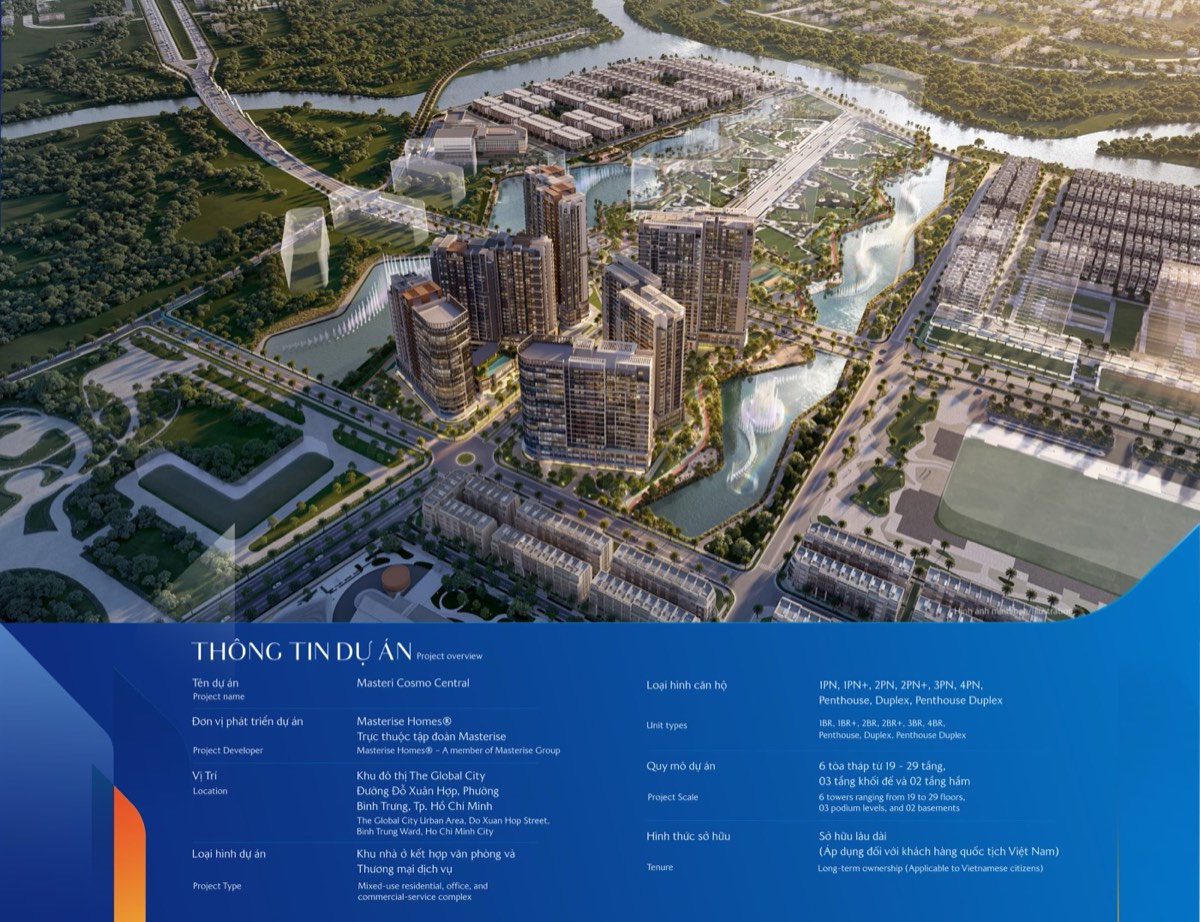
Tower Decision: A vs. B1 vs. B2
Tower A (27 floors, IFC-facing): highest prestige positioning. Demand from senior bankers, fund managers, and single-professional foreign residents. Premium of 5–7% vs. B1/B2; sell-out velocity 1.5× faster on comparable units. If you are investing for resale velocity or renting to senior-tier IFC staff, Tower A wins.
Tower B1 (23 floors, mixed-use adjacency): most efficient floor plate in the cluster — minimal corridor waste, strong retail and amenity proximity. Demand from family-relocating foreigners and Vietnamese owner-occupiers. Balanced price and resale liquidity. If you are holding 5+ years and uncertain between yield and owner-use, B1 is the default.
Tower B2 (17 floors, boutique): shortest tower, lowest unit count per floor. River-facing upper floors (14 / 12B–17) carry a boutique premium but narrower buyer pool on resale. If you prioritise quietness, fewer neighbours, and view-driven enjoyment over velocity, B2 fits.
Floor Tier Strategy
- Floors 4–9 (entry tier): Counter-intuitive value. Low-floor units trade at 10–15% discount but attract IFC families with children (metro access, street-level convenience, less reliance on view). Hold value well, rent easily. Best for yield-first investors with 5+ year hold.
- Floors 10–17 (mid tier): Often the best practical floors for owner-occupiers — you still read the amenity deck clearly (podium pool, gardens, water feature), you are above street noise, and price sits below high-floor premium. For end-users prioritising daily livability over resale velocity, this band is the sweet spot.
- Floors 18–23 (upper typical): Premium resale tier. Cleaner sight lines toward Thu Thiem and the Saigon River; rental demand from IFC professionals who value the view as a status marker. Note: amenity-deck visibility diminishes as you go higher — by floor 24+ the podium reads as abstract pattern rather than usable scenery. Mr. Le concentrates best-unit recommendations for investor-profile buyers in this band.
- Floors 24–27 (Tower A only, sky tier): Ultra-luxury — only for 8–10 year holders. View is sky and distant horizon, not amenity deck. With no major landmarks at CT4 sight-line range, higher is not automatically better. Buy this tier only if you specifically value openness and prestige positioning, not amenity connection.
Unit Type by Buyer Profile
- Foreign Investor (rental-yield focus): 1BR or 1BR+ in Tower A, floor 18–23. Rent to incoming IFC singles. Projected 6–7% gross yield from Year 3. 5–7 year hold.
- Foreign Family Relocating (owner-occupy): 2BR+ or 3BR in Tower B1, floor 10–18. Kids walk to King’s College Wimbledon (opening 2027). Accelerated payment (14.5% discount) if cash liquidity allows.
- Vietnamese Investor (diversified): 2BR in Tower B1 or A, floor 18–20. Bank Loan track (70% BIS 0%). Holds 5 years, sells into the IFC-activation pricing.
- Vietnamese Family Upgrading (end-user): 3BR in Tower B1, floor 5–15. Comfortable family living with resale optionality. Standard Progressive payment — cash-flow friendly.
- Offshore Passive Investor (hands-off): 2BR or 2BR+ in Tower A, floor 22+. Accept 10.5% discount (foreign non-resident tier). Use Realtique property management. 8–10 year hold.
Timing and Phase-Up Mechanics
Mr. Le’s closing line in urgency conversations in urgency conversations: “If you’re serious, buy in the first 30 days. Units purchased on Day 1–30 typically gain 500–800M VND in book equity by Day 90 when Phase 2 opens. That’s 10–15% gain for zero market risk — you’re just capturing pricing mechanics.”
This isn’t marketing pressure. It’s how velocity-triggered pricing works:
- Day 0–30: Phase 1 pricing. Full unit mix available. Best floors / view positions in all three towers still selectable.
- Day 30–60: Mid-floor 2BR and best-view 3BR clear. 7% SPA discount still intact. Remaining Phase 1 inventory narrows.
- Day 60–90: 2BR inventory at ~70% cleared — phase-up trigger. Pricing raises 8–12% on remaining comparable units.
- Day 90–150: Phase 2 formally acknowledged. 1BR and 3BR clear at new pricing. Additional +1% / +2% bonuses (pre-31 Mar 2026) have expired.
Bonus discounts are the clearer time-cost: the +1% survey-period buyer discount and +2% existing-Masterise-resident discount expire 31 March 2026. For a 9.5B VND unit, this is 55–110M VND of real money — roughly one year of professional management fees. Waiting has a quantified price.
Objection Handlers — What Your Inner Skeptic Is Asking
Seven objections we hear most often, with the data-backed responses used internally:
“The price feels inflated.”
No comparable project exists in Vietnam pairing IFC proximity, green certification, Masterise governance, Metro Line 2, and Foster+Partners retail. Buyers comparing to standard HCMC inventory find no reference point — which reads as “inflated.” Comparable internationally-tiered projects in Singapore trade at 25–30% higher price per m². This is category pricing, not inflation.
“What if the IFC stalls?”
Two protections: (1) IFC construction is physical and ongoing — courthouse framework, train stations, office towers are being built, not proposed; (2) Even if IFC slowed by 2–3 years, Metro Line 2 and Foster+Partners retail anchor residential pricing independently. The IFC is the upside scenario; the metro + retail is the downside floor.
“Why not wait for Phase 2 pricing?”
Phase 2 has never decreased in any Masterise launch studied — it increases 8–12%. Waiting for a “cooler market” means paying more for worse remaining inventory. If you’re certain you want in, the waiting cost is quantifiable and negative.
“Will resale hold in 3–5 years?”
Green-certified real estate historically holds 15–20% better value in downturns because institutional capital (pension funds, insurance) is legally required to allocate into ESG-certified assets. Distressed sellers find forced buyers. CT4 is the only Phase-1 launch in HCMC currently targeting this certification tier.
“Isn’t this too expensive for expats? Won’t demand evaporate if the economy slows?”
IFC-bound professionals are not discretionary buyers. The 5–10 year income-tax exemption is a structural policy incentive that does not evaporate with market conditions — arguably, it becomes more attractive in tight conditions. $300K salaries with zero tax + lower HCMC cost-of-living make a 9.5B VND unit genuinely cheap relative to Singapore or Bangkok comparables.
“What about rental tenants? Is the demand real?”
8,000–12,000 IFC-bound professionals arriving within 5–10 years. They require housing within 15 minutes of the IFC. CT4 is the closest integrated project meeting international-standard governance expectations. Projected Year 3+ gross yield: 5–6%. Year 1–2 yield is lower because migration is staged — buyers assuming Day-1 yields are miscalibrated.
“Why not buy in Singapore or Bangkok where markets are mature?”
(1) Saturation — Singapore prime prices exceed SG$100K/m²; CT4 is 25–30% cheaper per m² with comparable positioning. (2) Bangkok’s IFC is 20 years old with congestion and legacy costs. Thu Thiem IFC is new, with international-court framework and zero legacy friction. (3) Vietnam is the emerging financial capital story of the next decade — appreciation in emerging-tier markets compounds faster than in mature ones. Projected 10-year annualised appreciation: 12–15% vs. 3–5% in mature markets.
What NOT to Do — 7 Traps to Avoid
- Don’t compare unit-for-unit across projects. A 1BR at CT4 is positioned for IFC professionals (premium rental tier). A 1BR at a volume-play competitor targets different demand. Price per m² is one axis of many.
- Don’t wait for “perfect” market timing. Velocity-triggered phase-ups move faster than market-timing windows. The unit types worth buying clear in 60–90 days. When you finally decide, the best inventory is gone.
- Don’t buy mid-floors (10–17) for investment. These are the “dead zone” of high-rise inventory — mediocre views, no prestige premium, slower resale velocity. Buy them only if you’re owner-occupying and price-sensitive.
- Don’t expect Day-1 rental yields. IFC workforce migration is staged over 5 years. Year 1–2 yield is modest; Year 3+ yield hits 5–6%. If your model requires Day-1 cash flow, calibrate to a 2–3 year ramp.
- Don’t assume Phase 2 pricing is negotiable. Masterise pricing mechanics are driven by sell-out velocity, not negotiation. No broker can get you Phase 1 pricing after the phase-up.
- Don’t confuse prestige with investment. If you’re buying to live in and enjoy, that’s a lifestyle purchase — legitimate, but don’t require investment-grade returns from it. If you’re buying for returns, let the unit selection framework govern, not your aesthetic preferences.
- Don’t mismatch payment track to capital profile. Track 1 (Standard 7%) suits buyers preserving cash flow. Track 2 (Accelerated 14.5% / 10.5%) suits buyers with cash liquidity and appetite for upfront discount. Track 3 (Bank Loan 0% BIS) is Vietnamese-citizens-only and suits leveraged yield plays. Foreign non-residents using Track 2 at 10.5% is the common optimal fit — don’t default to Track 1 out of habit.
The 10-Year Math — What a Serious Buyer Is Actually Buying
Strip away the narrative and run the numbers on a representative 2BR unit at 9.5B VND purchase (Phase 1, Accelerated Track, 14.5% effective discount):
- Effective purchase price (post-discount): ≈ 8.1B VND
- Projected annual appreciation (Years 1–10): 12–15% — ecosystem activation phase
- Capital value at Year 10 (mid-case): ≈ 26B–30B VND (value multiplier ≈ 3.2–3.7×)
- Gross rental yield (Years 3–10 weighted average): 5.0–5.5%
- Cumulative rental income (10 years, post-vacancy): ≈ 4.9B VND (before tax/fees)
- Total gross return on effective purchase: ≈ 280–310%
- IRR (pre-tax, leveraged for VN citizens on Track 3): 18–22% compound
Sensitivity: even in a conservative scenario (8% annual appreciation, Year 3+ 4.5% yield) total return remains above 180% over 10 years. The downside case is not “loss” — it is “moderate return.” The upside case is asymmetric.
This is the quantitative reason Mr. Le concludes his expert-training framework with the line: “This isn’t speculation anymore. This is state planning — national strategy.” The returns compound because the ecosystem compounds, and the ecosystem compounds because policy and infrastructure are already committed.
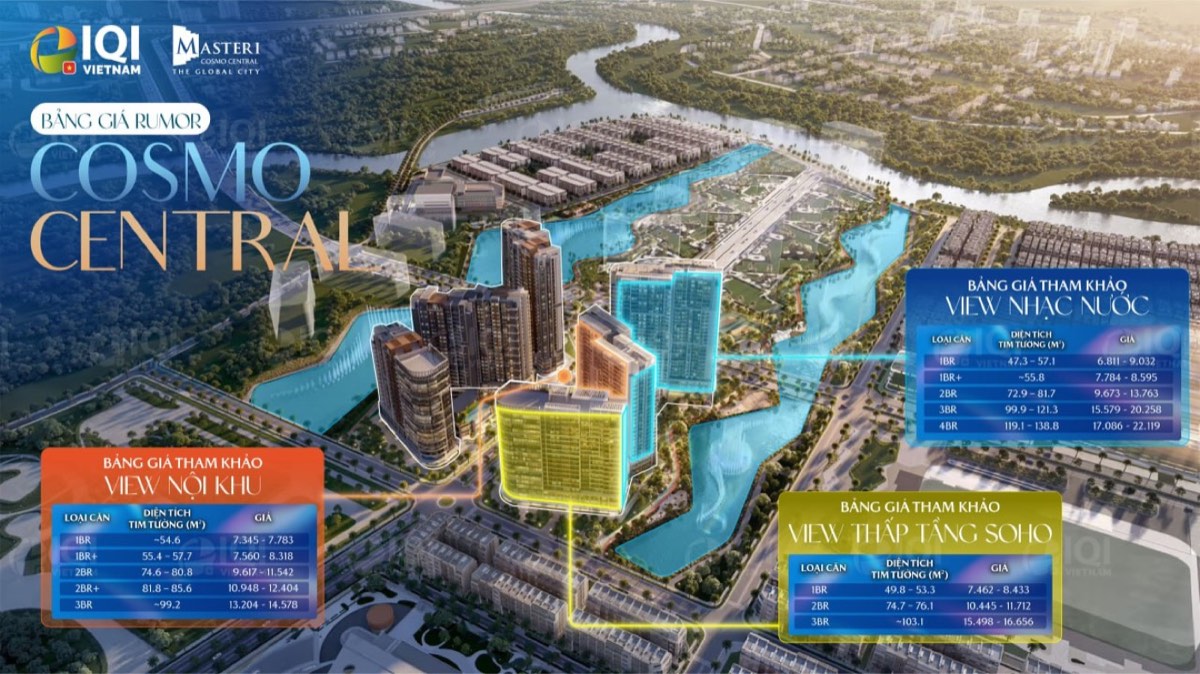
Recommendation by Buyer Profile — The Bottom Line
If you match one of these profiles, here’s the single unit + payment-track combination we’d recommend you explore first on a consultation call:
- Foreign Investor (yield-first, 5–7 year hold): 1BR+, Tower A, floor 18–22. Accelerated Track 2 (10.5% discount). Use Realtique property management. Target exit at Year 5–6 during peak IFC activation.
- Foreign Family Relocating (owner-occupy, school-first): 3BR, Tower B1, floor 10–15. Accelerated Track 2 (14.5% if resident status; otherwise 10.5%). Walk to King’s College Wimbledon.
- Vietnamese Investor (leveraged): 2BR, Tower A floor 18–23 or Tower B1 floor 19–22. Bank Loan Track 3 (0% BIS until 2029). 5–7 year hold capturing phase-up + IFC wave.
- Vietnamese Family Upgrading (end-user): 3BR, Tower B1, floor 8–14. Standard Track 1 (7% + 1–2% bonus). Preserve cash flow; hold 5+ years.
- Offshore Passive Investor (8–10 year hold): 2BR+, Tower A, floor 22–27. Accelerated Track 2 (10.5%). Hand off to Realtique management. Exit Year 8–10 into international-buyer channel.
The above are starting points, not final recommendations. The right unit for your profile depends on current live inventory, floor availability, and view position — which is exactly the conversation to have with a consultant.
Frequently Asked Questions
How long should I plan to hold Masteri Cosmo Central?
Minimum 5 years to capture core ecosystem activation. Optimal 7–10 years to capture full IFC ramp and green-certification liquidity premium. Flips under 3 years typically under-realise the thesis because the demand engine is staged, not immediate.
Is the IFC guaranteed to reach $100B AUM?
No policy outcome is guaranteed, but the infrastructure, tax incentives, metro access, and corporate-relocation pipeline are all already committed. Our view: a delay of 2–3 years is a realistic downside; cancellation is highly improbable given state-level commitment. Even a delayed IFC preserves the Metro Line 2 + retail thesis.
Can I negotiate the price?
Not at Phase 1 pricing. Masterise sets unit prices by tower/floor/view position and does not negotiate at launch. Value is extracted through (a) selecting the right unit, (b) choosing the optimal payment track, (c) locking in before phase-up, (d) capturing bonus discount windows. Realtique adds value at all four levers, not at price negotiation.
What if I'm a foreign buyer without residency status?
Track 2 at 10.5% discount is the typical optimal fit. Foreign buyers cannot access Vietnamese bank loans by law, so Track 3 is out. Track 1 (7%) is available but leaves 3.5% on the table vs. Track 2. Full foreign ownership quota applies (30% per building) — entering early improves unit availability.
What's the next step if I'm interested?
A 30-minute consultation with a Masteri Cosmo Central specialist to review (a) live inventory, (b) best-fit unit options for your profile, (c) payment track selection, (d) bonus discount eligibility. No cost, no obligation. Request below.
- Australia-educated — analytical, research-driven
- Thu Thiem IFC specialist — tracks live workforce migration signals
- Phase-up velocity dashboard — knows which 2BR inventory clears first
- Buyer-profile matching — unit selection by strategy, not emotion
- Direct line to Masterise Homes — Phase 1 inventory access