
The Berkley Long-Term Lease Structure: What Foreign Buyers Acquire
Table of Contents
Most foreign buyers approaching Vietnamese residential product expect to encounter the standard 30 per cent foreign-ownership cap on apartment buildings. The Berkley is structured differently. Sonkim Land has chosen a long-term lease arrangement (LTLA) — formally, a real-estate lease contract running until 31 December 2075 — as the legal vehicle for the entire 85-residence collection. The structure is uncommon in HCMC residential and gives The Berkley a distinct legal personality buyers should understand before committing.
This article explains the structure, what it means for foreign buyers in practice, and the specific questions worth running past your own legal advisor before signing.
Important caveat: we have reviewed the Vietnamese-buyer LTLA template. The foreign-buyer template will differ in several specific provisions, and Sonkim Land has not yet circulated the foreign template publicly. The framework described here applies broadly; specific clauses for foreign buyers should be verified with your advisor when the template is shared.
Why a Long-Term Lease Instead of a Conventional Sale?
Vietnam’s residential property regime caps foreign ownership at 30 per cent of units in any single condominium building. For a developer with a tightly-curated 85-residence collection, the 30 per cent cap would limit foreign-buyer participation to roughly 25 units — and would impose a 50-year ownership ceiling on those units (the standard foreign-buyer tenure under Vietnamese law).
The long-term lease structure addresses both constraints. By converting the buyer’s interest into a lease (rather than freehold ownership), the developer can extend the structure to a higher proportion of foreign buyers, and the lease term aligns with the buyer’s effective economic horizon. The structure is similar in functional effect to leasehold tenure in Singapore HDB, Hong Kong leasehold land, or UK leasehold flats — buyers in those markets understand the model intuitively.
What the Buyer Actually Acquires
Under the LTLA structure, the buyer’s interest is a long-term lease running to 31 December 2075 — approximately 49 years from current execution, with provisions for extension or conversion based on the developer’s discretion within the contract framework.
The lease grants the buyer:
- Exclusive use of the apartment for the lease term, including the right to live in it, use it as a primary residence, or hold it vacant.
- Sub-leasing rights — the buyer can rent out the apartment to third parties under standard tenancy arrangements, subject to building rules.
- Inheritance rights — the lease passes to designated heirs under standard succession provisions.
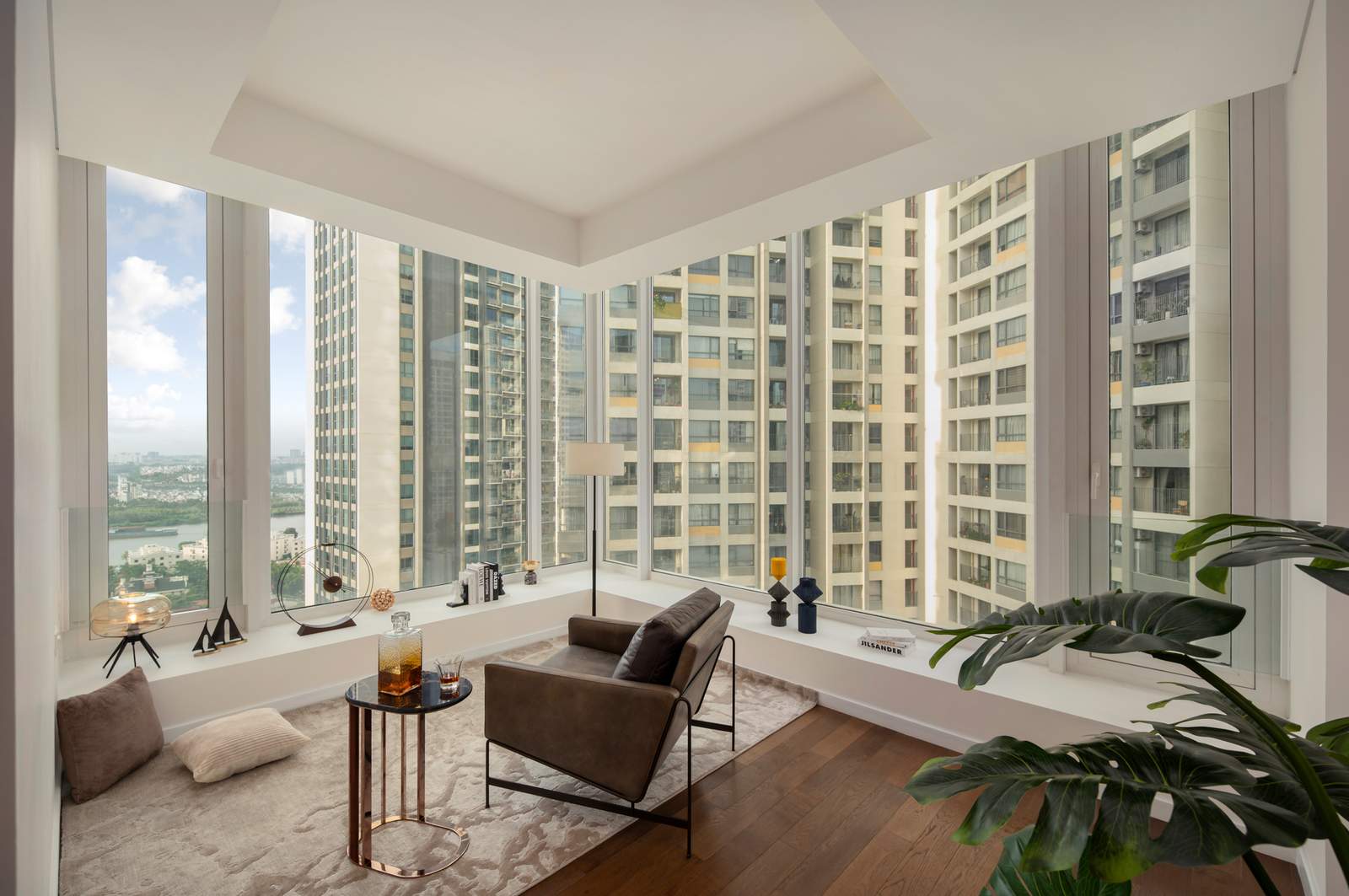
- Use of common areas — pool, gym, yoga studio, sky garden, lobby, basement parking, common corridors.
- Quiet enjoyment — the developer cannot unilaterally interfere with the buyer’s use during the lease term, subject to the standard maintenance and management provisions in the building rules.
The lease does not grant ownership of the underlying land, the building structure itself, or the unit’s physical fabric. Those remain with the developer/landlord.
Comparison to Familiar Leasehold Frameworks
| Market | Lease term | Practical effect |
|---|---|---|
| Singapore HDB / 99-year leasehold private | 99 years | Most owners hold 30–60 years; renewable at end |
| Hong Kong New Territories | Until 2047 (post-1997 standard) | Renewal terms negotiated periodically |
| UK leasehold flat | 99–999 years typical | Buyers extend via statutory enfranchisement |
| The Berkley LTLA | Until 31/12/2075 (~49 years) | Most economic interest captured within hold period |
For most buyers, a 49-year economic horizon exceeds the practical hold period. Resale within 5–15 years is the typical pattern; the lease end date matters more for inheritance planning than for the buyer’s own economic interest.
Common-Area Entitlements
The LTLA explicitly grants buyers use of the building’s common areas. From the contract:
- Basement parking (allocated and shared as appropriate)
- Lobbies, corridors, elevators, fire escapes
- Sky garden at level 10
- Pool, BBQ area, gymnasium, sauna, sky garden at level 20
- Yoga and multi-purpose room at level 21
Use of these amenities is conditional on compliance with the Building Rules and operational policies, and includes payment of standard management and maintenance fees pro-rated to the apartment’s share.

Maintenance and Management
The developer (lessor) commits to maintaining the property until 31/07/2028. After that date, maintenance responsibility transfers to the lessee (buyer) or to the building management entity per the standard apartment-management framework in Vietnamese law.
Monthly management fees apply for the building’s shared services — security, concierge, common-area maintenance, lift maintenance, fire-safety systems. The fee is set in the contract and adjusts periodically per the standard mechanism.
Sub-Leasing and Short-Term Rental
The LTLA explicitly permits sub-leasing — the buyer can rent the apartment to third parties for short or long-term tenancies. The buyer remains responsible for the sub-tenant’s compliance with the Building Rules.
This provision is what enables The Berkley’s managed short-term rental concierge service (covered in the amenities article) — the buyer rents the apartment short-term, and the building’s in-house concierge handles guest check-in, key management, and amenity orientation.
Termination, Penalties, and Force Majeure
The LTLA includes standard provisions covering early termination scenarios — late payment, force majeure events extending beyond 180 days, fundamental breach by either party. Penalty for unilateral termination by either party is set at 20 per cent of the lease consideration. Late-payment interest accrues at 0.05 per cent per day.
Force majeure scope follows the standard Vietnamese commercial-contract framework — war, natural disaster, regulatory changes, pandemic, government emergency orders. The 180-day threshold is the typical termination trigger if force majeure persists.
What Foreign Buyers Should Verify Before Committing
The framework above describes the Vietnamese-buyer template. The foreign-buyer template will differ in specific provisions. Verify the following with your legal advisor when Sonkim Land circulates the foreign template:
- Lease term and extension mechanism — confirm the 31/12/2075 end date applies, and understand any provisions for extension at end-of-term.
- Sale-conversion option — the Vietnamese template includes a provision allowing conversion of the lease into a sale agreement under specific conditions; the foreign template likely includes a similar but distinct provision.
- Tax treatment — VAT treatment of lease payments, transfer-tax treatment on resale, capital-gains treatment on appreciation. These vary materially by buyer nationality and the tax treaty position between Vietnam and the buyer’s tax-residence country.
- Estate planning — succession to non-Vietnamese heirs, cross-border probate considerations, and provisions for sub-leasing during succession transitions.
- Currency and payment-flow specifics — Vietnamese-buyer template requires payment in VND through Vietnamese bank channels. Foreign-buyer template may include provisions for offshore payment, USD-denomination conversion mechanics, or bank-clearance requirements specific to the buyer’s home jurisdiction.
- Resale liquidity — secondary-market sale of LTLA leasehold interest follows different procedures than freehold sale. Confirm process, transfer fees, and developer-consent requirements.
- Dispute resolution — Vietnamese template specifies Vietnamese courts. Foreign template may include arbitration provisions or international forum selection.
- Bilingual contract priority — Vietnamese template defaults to Vietnamese-language version controlling in case of conflict. Foreign-buyer English-language version will have a similar framework — confirm priority and translation procedures.
Practical Implications for Different Buyer Profiles
Foreign expat using the apartment as primary residence: the LTLA structure is functionally equivalent to ownership for the buyer’s practical horizon. The 49-year lease term materially exceeds typical hold periods.
Foreign investor holding for yield: sub-leasing rights and the managed short-term rental concierge make the structure operationally effective. Resale to another foreign buyer mid-lease is supported, with the lease transferring along with the unit interest.
APAC investor familiar with leasehold (Singapore, Hong Kong, UK): the structure aligns with frameworks already understood. Most buyers from these markets will recognise the model immediately.
Estate-planning-focused buyer: succession to heirs is supported, but foreign-buyer estate-planning specifics warrant additional advisor review — particularly around cross-border probate and the practical mechanics of inheriting a Vietnamese leasehold interest from outside Vietnam.
Bottom Line
The Berkley’s long-term lease arrangement is a deliberate legal structuring choice that enables the developer to extend foreign-buyer participation beyond the standard 30 per cent quota. The structure is well-understood internationally — comparable to leasehold frameworks in Singapore, Hong Kong, and the UK — and the 49-year term materially exceeds the typical buyer hold period.
For foreign buyers, the structure is workable in principle but requires advisor review of the specific foreign-buyer template before signing. Approach the LTLA the way you would approach a leasehold acquisition in any sophisticated jurisdiction: confirm the term, the use rights, the resale mechanics, and the tax position. The framework is sound; the specifics matter.
If you would like introductions to legal advisors familiar with Vietnamese real-estate LTLA structures and the cross-border tax considerations for foreign buyers, our team maintains a list of working contacts.
Get the Full The Berkley Investment Report
Pricing by stack and floor · Payment track comparison · Lease structure summary for foreign buyers
Only 85 residences. Allocations move fast. Drop your details below — we will send you the live availability map, payment-scheme math run on your entry size, and a private walkthrough invitation within the same working day. Or speak directly: +84 866 810 689.

KC Pham
More on The Berkley Thao Dien
- ★ Complete Review 2026 (Pillar)
- → Price 2026 — Payment Tracks
- → Thao Dien: Vietnam’s #1 International Enclave
- → An Phu Metro & The TOD Effect
- → Floor Plans: 13 Layouts Decoded
- → Amenities + Thao Dien Hotspots
- → Is The Berkley Overpriced?
- → Buyer’s Guide A-Z
- → Insider’s Decision Guide
- → Sonkim Land Track Record