HAUS DNA — “Preserve & Grow the Community” Philosophy at Haus Coastal Quang Ngai
Table of Contents
Most Vietnamese real estate brands market themselves on financial returns or product specifications. HAUS — the developer of Haus Coastal Quang Ngai — markets itself on a philosophy: “a community preserver and developer, not just a builder.”
That phrase sounds like marketing copy. Once you understand the operational implications, it becomes the most consequential thing about the project. Here’s what HAUS’s DNA actually means — and why it changes the buyer’s calculation.
The "Bespoke Design" Principle
At HAUS, every project is what the team calls a “bespoke design” — meaning the master plan is tailored uniquely to the site, drawing from local culture, ecology, and community needs. No layouts are repeated across HAUS’s seven planned locations through 2028.
Compare this to typical Vietnamese developer practice: a successful master plan template gets replicated across 5-10 sites with minor adjustments. The economics are obvious — design costs amortize across scale. The result: developments that feel placeless, interchangeable, lacking identity.
HAUS rejected this. Haus Đà Lạt (mountain) and Haus Coastal Quang Ngai (sea) share no design DNA. The next HAUS project will share none with either. Each one starts from listening to the land.
Listening to the Land Before Drawing
HAUS’s design process inverts standard practice. Normally a developer commissions a master plan from a Vietnamese architecture firm, gets approval, starts selling. HAUS’s process:
- Site-listening phase — multiple months studying climate patterns, native ecology, local mythology, traditional land use
- International partner selection — choose specialists matched to the site’s specific needs (e.g., Nordic climate-adaptive engineering for coastal flood resilience)
- Cultural integration — embed local references into design decisions, not just superficial aesthetics
- Master plan finalization — only then drawing begins, with the goal of producing something that could not exist anywhere else
For Haus Coastal Quang Ngai, this process produced the Cá Ông (Whale Land) geographic framing, the 100 Architects play features inspired by traditional fishing, the SHMA mangrove preservation strategy, and the SWECO climate-elevation calculations.
~ 30 AMENITIES
AMENITY DESIGN ACROSS 5 LIVING-EXPERIENCE LAYERS
- Mangrove Conservation Park
- Riverside Park
- Firefly Garden
- Biological Discovery Park
- Coastal & Riverside Walkways
- Sports Park
- Wellness & Healthcare Center
- Coastal Plaza
- Floating Market Plaza
- Family Park
- Fishing-Village Park
- K-12 International School
- Forest-Adventure Playground
- Biological Discovery Park
- 5-Star Resort
- Marina
- Shopping Street & F&B
- Design Exhibition Center
- Sunset Viewing Point
60% Green / 14% Buildable — A Philosophical Choice, Not a Compromise
The land-use ratio at Haus Coastal — 56.5 hectares of green space and water versus 13.3 hectares of residential land — is the most concrete expression of HAUS’s DNA.
Standard Vietnamese coastal developer practice: maximize residential land share to 30-50% to optimize revenue per hectare. HAUS’s choice (14% residential) is voluntarily leaving 50-100 billion VND of potential revenue on the table to preserve community ecology.
This is not philanthropy. It’s a long-cycle bet that preserved ecology produces durable property values. Coastal developments that maximize buildable land in 2025 often suffer 10-15 years later when the local ecosystem degrades and surrounding environmental quality declines. HAUS’s bet: communities built around preserved ecology age better.
Multi-Generation Community Design
HAUS’s DNA explicitly targets multi-generation Vietnamese families — grandparents, parents, and children living in proximity but with private space.
This shows up in concrete design choices:
- Beach Therapy Mansion compound with 4 security layers — privacy for elder family members in a gated environment
- Single-detached villa lines sized for households of 5-8 people across two-three generations
- Playgrounds engineered for “three-generation engagement” — children play, parents supervise comfortably, grandparents enjoy shaded seating nearby
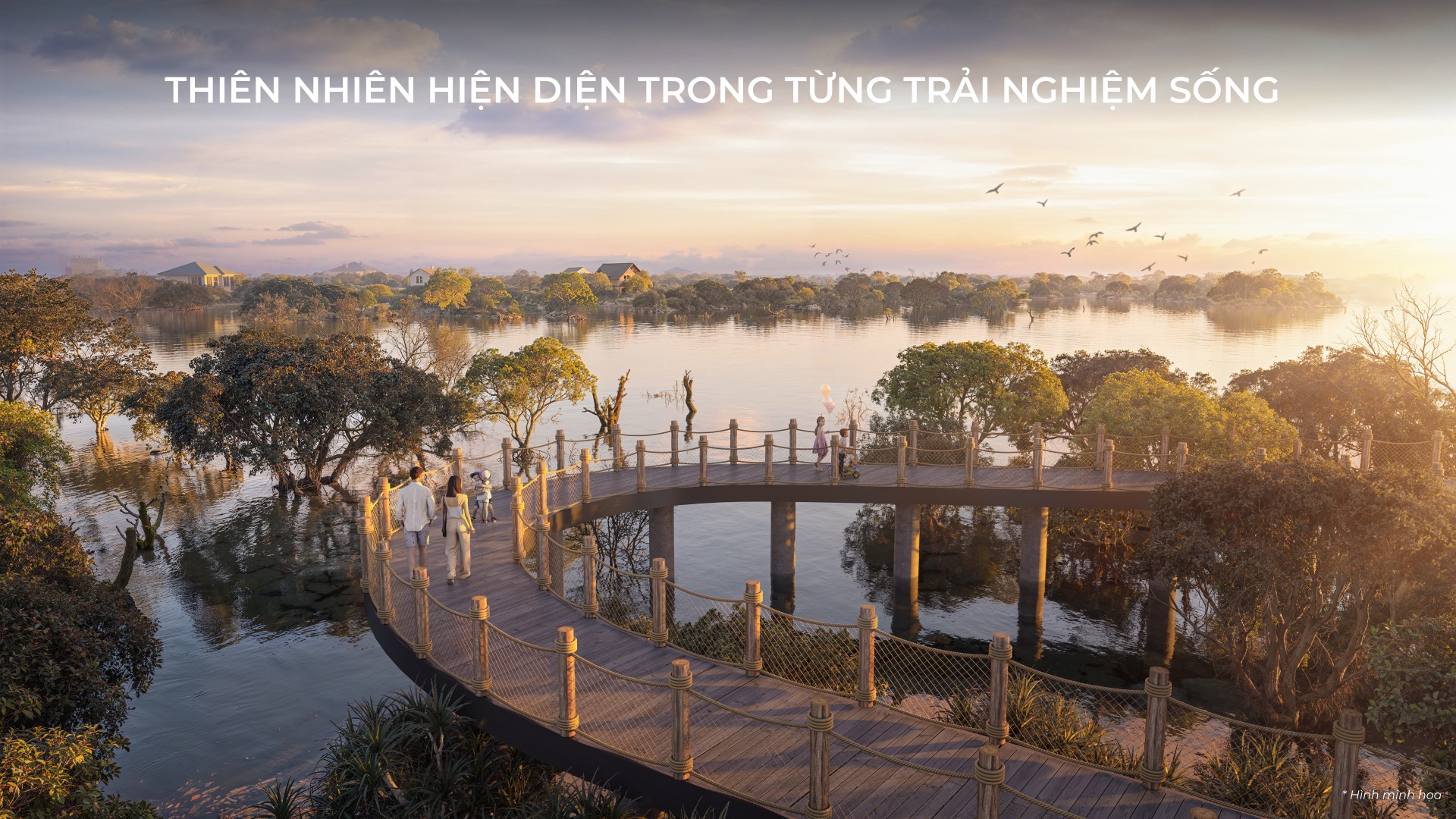
- Mangrove walkway shaded seating at intervals — accommodating elderly walking pace
- Healthcare center 4,500 m² on-site — accessible without leaving the community
This is a market-segmentation choice: HAUS targets families willing to pay premium for multi-generation living, not solo buyers or transient investors.
Backing the DNA: Funds & Governance
HAUS’s philosophy is only durable if backed by aligned capital. The two international investment funds behind HAUS were chosen specifically for their long-term orientation:
- Terne Holdings (Singapore) — Asian real estate fund specializing in sustainable-value projects (multi-decade hold horizons)
- BTS Bernina (Switzerland) — Swiss fund from the global capital of long-term human-centered economies
Chairman Michael Sheren — former Bank of England senior advisor and co-chair of the G20 Sustainable Finance Study Group — provides governance that holds HAUS to ESG (Environmental, Social, Governance) standards normally seen in international institutional projects, not Vietnamese real estate.
This is the structural reason HAUS’s philosophy is durable rather than marketing. The investors don’t want quick exits; the chairman won’t tolerate ESG compromise; the team is incentivized for multi-decade quality, not quarterly sales.
Why This Matters for Buyers
HAUS’s DNA produces a specific buyer experience:
- Slower velocity, higher conviction — HAUS doesn’t market aggressively or push for fast turnover. Buyers come because the philosophy resonates, not because of pressure tactics
- Higher entry premium, lower lifetime cost — initial prices reflect international design and engineering standards, but maintenance, insurance, and depreciation costs are lower
- Community formation is built-in — multi-generation design, cultural anchoring, and amenity quality produce communities that mature into tight neighborhoods rather than transient settlements
The DNA is the most important thing about Haus Coastal Quang Ngai. Specifications, prices, payment policies — those are downstream consequences of the DNA. Understanding the philosophy first is how you decide whether the project fits your family’s needs.
Get the Haus Coastal Quang Ngai Brief from Realtique
Latest pricing, payment policy, available units, legal status — our consultants respond within 2 business hours.
Vietnamese citizens and Việt Kiều (overseas Vietnamese) with eligible documentation can purchase. International readers — talk to us about Central Vietnam market context.