
The Berkley Insider’s Decision Guide 2026 — Expert POV
Table of Contents
The other ten articles in this series cover what The Berkley is, how to value it, and how to acquire it. This article covers what we tell our private clients during the actual decision conversation — the unit-selection framework, the phase-up logic between layouts, the top objection handlers we hear from serious buyers, and the 10-year ROI math we run before recommending allocation. It is the closed-door version of the consultation.
If you are reading this article in a public-facing series, you are most of the way through the decision process. The framework below is the next step.
The Unit-Selection Framework
We work through unit selection in three sequential decisions, each narrowing the candidate set:
Decision 1: Use case (residence vs investment)
The first decision determines the layout pool. Residence-first buyers prioritise C1 (garden + balanced flow), C2 (3BR for households of 3+), or C4 (premium spec + 3 bathrooms). Investment-first buyers prioritise C3 (efficient yield play), C5 (smallest entry, strongest yield-per-sqm), or the Floor 3 garden units (scarcity + Gateway Thao Dien resident demand).
Mixed-use buyers (lived in for 2–3 years, then deployed for short-term rental) typically converge on C3 or C5 — the layouts that work in both modes.
Decision 2: View priority
Within your candidate layout pool, the next filter is view orientation:
- City centre / D1 view (toward Ben Thanh, Landmark 81): upper-floor C3 and C4 on the appropriate face. Most “iconic Saigon” view.
- River view (toward Saigon River bend): C1 master bedroom (90-degree glazing), select C3 stacks. Best for atmospheric value, lower for “Saigon hustle” energy.
- Southern Saigon urban view (toward D7, new urban districts): C2 living-and-dining areas. Most expansive sense of city scale.
- Metro-side view: 5–8 per cent discount; works for tenants who value convenience over aesthetics.
Decision 3: Floor band
Within layout + view, the floor band determines pricing:
- Floor 3 garden units: unique stock; scarcity premium; aim here if you want a “marker” unit and can move quickly.
- Floors 4 and 5–9: entry pricing within typical inventory.
- Floors 12–19: premium upper band — pricing steps up roughly 8–15 per cent over lower floors for the same layout.
- Floor 20: top pricing — adjacent to the rooftop amenity floor; views are at maximum.
For most buyers, Floors 12–17 deliver the optimal balance of view, premium positioning, and price-per-sqm efficiency. Floors 18–20 carry top-of-market pricing that owner-occupiers value but yield investors should evaluate carefully.
The Phase-Up Logic
Buyers who can afford C2 or C4 but are weighing whether to “go bigger” should think about phase-up logic — the practical reality that bigger is not always better, and the right-sized unit serves the buyer better than the maximally-sized unit.
Phase-up indicators (favour bigger): household of 3+ planning to stay 5+ years; entertainment-frequent owner; buyers planning to use the unit as primary residence with intermittent guest stays; investors targeting the highest-rent tier of expat family tenants.
Phase-down indicators (favour smaller): single or couple with no children expected within hold period; investment-first buyer optimising yield-per-sqm; buyers planning short hold (3–5 years) with resale exit; owner-occupiers planning extended travel.
The most common phase-up mistake we see: buyers stretching from C3 (94 m²) to C4 (143 m²) on aspirational reasoning, then realising the additional 50 m² serves a use case they don’t actually have. The C4 layout is exceptional — but only for buyers who actually need the third bathroom, the storage room, and the corner balcony. For everyone else, C3 + a Floor 12+ position delivers a better dollar-per-utility outcome.
Top Five Objection Handlers
The most common objections we hear from serious buyers, with the honest responses:
1. "The pricing is high vs older Thao Dien stock"
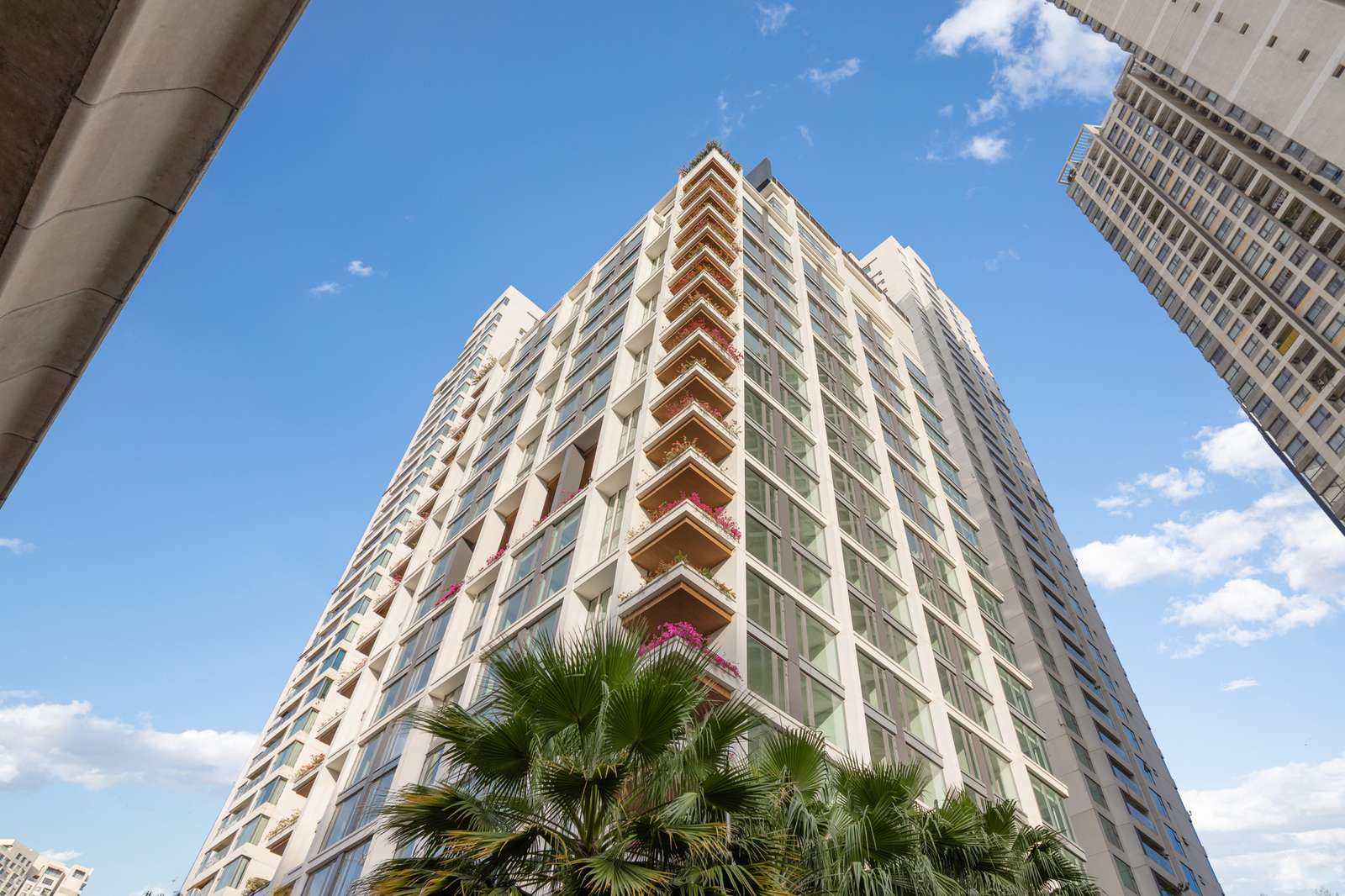
True on a strict price-per-sqm comparison. Three reasons the gap is justified: (1) The Berkley is a completed-and-ready-to-move building, while older comparable stock has been continuously occupied with corresponding wear; (2) the privacy-density advantage (5 units per floor + 4 elevators) is structural and not replicable in older buildings; (3) the metro-walk advantage from An Phu station post-2025 has materially shifted the rent-per-sqm calculus that supports valuations.
The honest follow-up: if pricing is the binding constraint, look at upper-floor C3 stacks rather than C2 or C4. The Berkley experience at C3 pricing exceeds most older Thao Dien stock at premium pricing.
2. "The 85-residence community is too small"
This is the inverse of the privacy-density argument and reflects a genuine trade-off. Buyers who value building-internal community (other resident families, shared amenity activities, cricket-on-the-pool-deck culture) are right to prefer larger megaprojects. The Berkley’s community is sized for the building-as-private-residence rather than the building-as-village.
Honest counter: the surrounding Thao Dien neighbourhood operates as the community layer — F&B venues, schools, parks, retail. Resident community happens at the neighbourhood level rather than the building level. Buyers who already understand and use the Thao Dien neighbourhood prefer this arrangement.
3. "Resale liquidity in a small building is unproven"
Partially true for the first 18 months of secondary trading. Sonkim Land’s reference points (Gateway Thao Dien, The Nassim) demonstrate that boutique buildings build secondary liquidity over 3–5 years, but the early window is genuinely thin.
Honest implication: if you may need to exit within 12 months, The Berkley is not the right vehicle. If your hold horizon is 3+ years, the secondary market will have matured by your exit window, and Sonkim Land brand-consistent buildings have demonstrated sustained secondary value historically.
4. "Metro adjacency is a long-term liability"
The opposite of the position 5 years ago. Metro Line 1’s 14 months of revenue operation has demonstrated that the catchment effect is real and concentrated. The structural concern (noise, vibration) is mitigated by the building’s acoustic glazing. The visual concern is stack-specific (avoidable by selecting non-metro-side stacks).
Honest counter: the long-term liability scenario assumed Metro Line 1 would underperform expectations. It has outperformed in ridership and price-impact terms. The thesis has flipped from “speculative upside” to “demonstrated upside.”
5. "The long-term lease structure is too unfamiliar"
For buyers from Singapore, Hong Kong, or the UK, the leasehold framework is intuitive. For buyers from freehold-default jurisdictions (US, Australia, parts of Europe), the structure requires more advisor-led explanation.
Honest counter: the 49-year lease term materially exceeds typical hold periods. The structure has functional equivalence to ownership for the buyer’s practical horizon. The legal complexity is manageable with appropriate counsel review (covered in the long-term lease article).
The 10-Year ROI Math
The framework we run for serious buyers, illustrative numbers for a hypothetical USD 600,000 (~VND 15 billion) two-bedroom unit:
Assumptions
- Foreign Early 50% scheme: effective price USD 532,800 in present-value terms
- Hold horizon: 10 years
- Gross rental yield assumption: 5% (current Thao Dien premium-tier average)
- Net rental yield (after maintenance, management, vacancy): 3.5%
- Capital appreciation assumption: 5% annualised (conservative; Thao Dien historical average has been higher)
- Discount rate (cost of capital): 8%
10-year cash flow profile
| Component | 10-year value (USD) |
|---|---|
| Net rental income (10 years cumulative) | ~210,000 |
| Capital value at year 10 (5% annualised appreciation) | ~975,000 |
| Less: original effective price | (532,800) |
| Less: 10-year holding costs (tax, transaction, maintenance) approximation | (45,000) |
| Net 10-year economic gain | ~607,000 |
| 10-year IRR | ~7.3% USD-denominated |
This frames the Berkley not as a “growth” investment but as a “yield + modest appreciation + tenant-quality-and-currency-stability” investment. Aggressive appreciation bets in Binh Duong or Long An deliver higher target IRR with materially higher dispersion. The Berkley delivers a tighter return distribution at lower expected return — the classic risk-quality trade-off.
Where Allocation Currently Stands
As of the formal launch window (May 2026), allocation status varies by unit type:
- C2 (3BR): 15 units total, allocation pressure highest. Premium upper-floor stacks are most-requested.
- C4 (premium 2BR + 3BA): meaningful early demand, particularly for the corner-balcony stacks.
- C1 (garden 2BR): strong family-buyer interest, particularly for Floors 12+.
- C3 (efficient 2BR): the broadest buyer pool — yield-focused investors, smaller-budget primary residences, mid-tier upgraders.
- C5 (smallest 2BR): targeted by younger yield-focused investors; allocation tighter than expected pre-launch.
- Floor 3 garden units: two units only, both heavily requested. Typically place within first booking window.
For live availability and scheme-specific allocation status, contact our team below.
Bottom Line
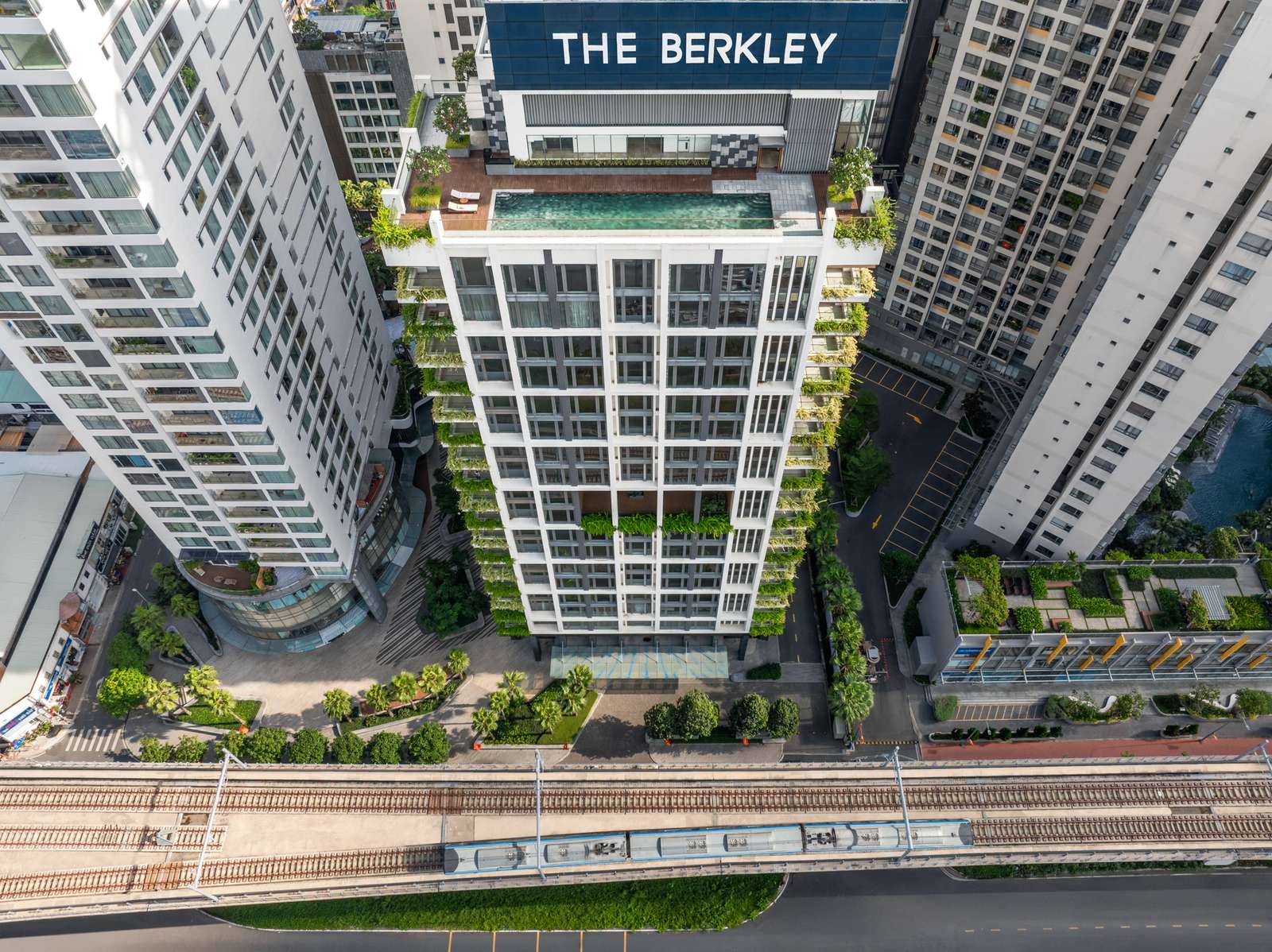
The Berkley is a deliberate, curated, completed product. It is not the right answer for buyers seeking maximum capital appreciation per dollar, fastest exit liquidity, or comprehensive megaproject amenities. It is the right answer for buyers who value privacy density, completed-building certainty, mature-neighbourhood lifestyle integration, walkable metro access, and the boutique-luxury Sonkim Land brand consistency.
The decision framework is sequential: use case → view priority → floor band → final unit selection. The objection handlers are honest: each major concern has a real basis and a real counter. The 10-year ROI math is conservative-positive — yield + appreciation + tenant quality, in that priority order.
If you have read through to this article, you have done the work. The next step is the private consultation: live unit availability, scheme math run on your specific numbers, and counsel introductions for the LTLA review. Direct-line contact below.
Get the Full The Berkley Investment Report
Pricing by stack and floor · Payment track comparison · Lease structure summary for foreign buyers
Only 85 residences. Allocations move fast. Drop your details below — we will send you the live availability map, payment-scheme math run on your entry size, and a private walkthrough invitation within the same working day. Or speak directly: +84 866 810 689.

KC Pham
More on The Berkley Thao Dien
- ★ Complete Review 2026 (Pillar)
- → Price 2026 — Payment Tracks
- → Thao Dien: Vietnam’s #1 International Enclave
- → An Phu Metro & The TOD Effect
- → Floor Plans: 13 Layouts Decoded
- → Amenities + Thao Dien Hotspots
- → Is The Berkley Overpriced?
- → Long-Term Lease Structure
- → Buyer’s Guide A-Z
- → Sonkim Land Track Record