
Has HCMC Real Estate Entered Its Recovery Cycle in 2026? Read the Capital Flows
Quick answer. Ho Chi Minh City real estate in 2026 has passed its most difficult phase and is entering a recovery cycle — but this time growth is driven by project quality and infrastructure, not “cheap money”. Stock-market swings or foreign net selling of shares do not mean capital is leaving property: money is rotating toward the South and into infrastructure corridors. For buyers, this is the time to choose projects with clean legal status, anchored to infrastructure, that generate cash flow — rather than standing aside with the crowd.
Table of Contents
"When stocks fall, property follows — so let's wait"
This is the most common objection right now: buyers see financial-market volatility, conclude that property must fall too, and decide to “wait until things are clearer”. The logic sounds reasonable, because stocks and real estate in Vietnam often move in phase — both react to interest rates, liquidity and market sentiment.
But moving in phase is not the same as being identical. Stocks react daily, with wide swings; property has a lag and is tied to legal status, infrastructure progress and local supply-demand. More importantly, you must separate two things: a group of investors selling shares is entirely different from capital leaving the market. Understand this and you decide with data instead of emotion.
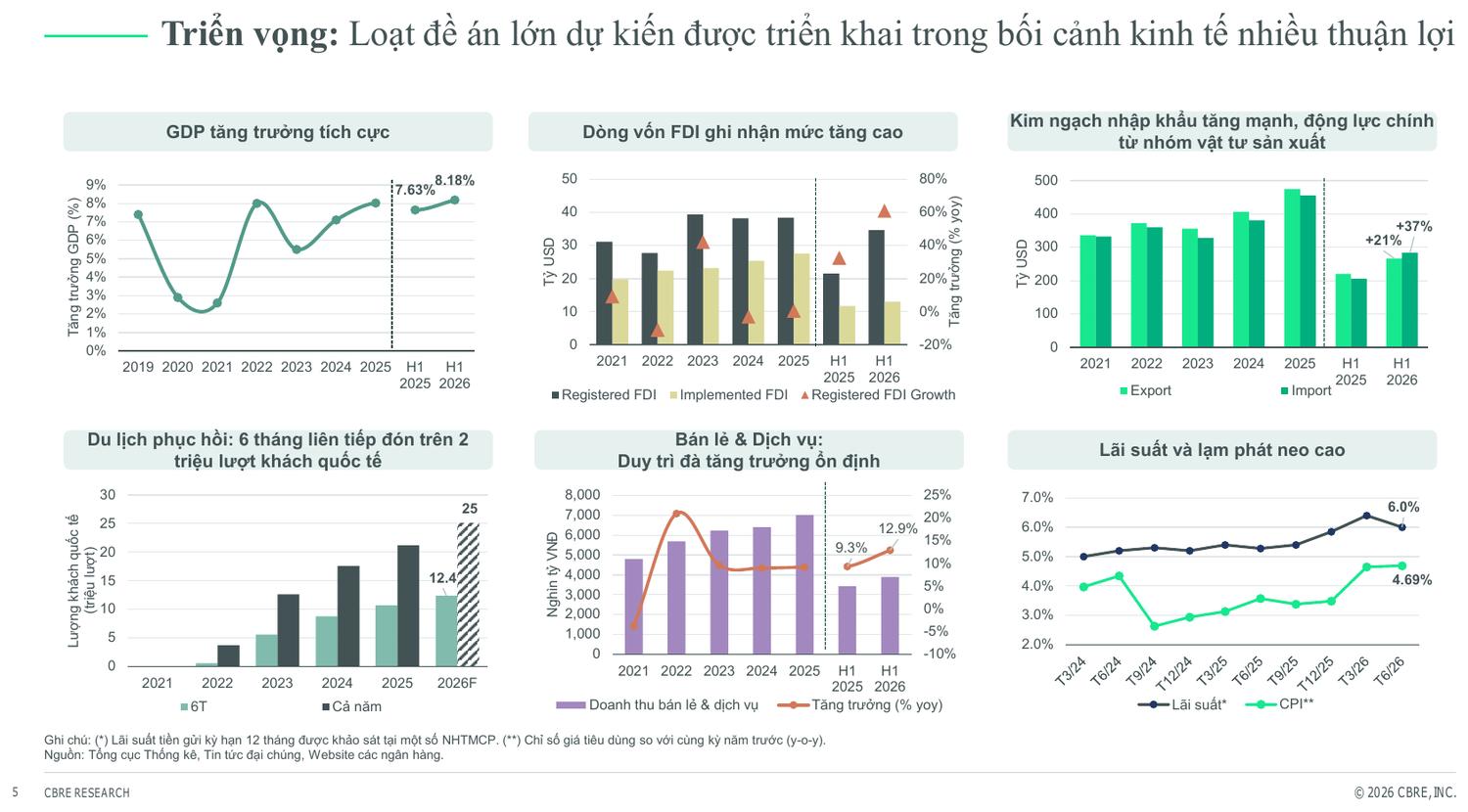
Foreign outflows from stocks ≠ leaving Vietnam
When foreign funds sell on the exchange, many read it as “foreigners are leaving Vietnam”. In reality, the stock market is only a small pond in the capital picture. Selling shares to take profit or rebalance a portfolio does not mean taking money out of the economy — most of the capital rotates rather than disappears.
Foreign direct investment (FDI) stays positive and is concentrating in infrastructure, manufacturing and industrial parks. The reason is very “economic”: factories and industrial parks need scale to achieve lower cost per unit, so long-term money prefers to flow here — invest today, harvest a few years later. It is patient capital, and it pulls demand for industrial, residential and service real estate around infrastructure corridors. See also our view on FDI into real estate 2026.
"Money isn't leaving the market — it's moving to safer places with real growth potential."
Credit is expanding but "picking winners"
The biggest difference in this cycle is that credit keeps expanding (economy-wide growth expected around the mid-teens for 2026), but capital is selective rather than flowing indiscriminately. Banks prioritise financially healthy developers, projects with complete legal status, and real estate serving genuine housing demand, infrastructure and manufacturing. Highly leveraged firms with incomplete legal status still struggle to access capital.
At the same time, average lending rates have come down to low levels (around 6.5% p.a. by aggregated data) and are expected to hold. The result: the market no longer rises on “cheap money” but on project quality. This is far healthier than previous frenzies — and the reason buyers need to be more selective. See also high lending rates in 2026 and how to choose a project and our what to invest in for 2026 perspective.
HCMC is entering a clear recovery cycle
At the market level, launch-ready supply in the first seven months of 2026 improved strongly versus the same period — a clear sign of a recovery cycle rather than a prolonged slump. More important than the numbers is the quality of demand: buyers now prioritise transparent legal status, guaranteed progress, reputable developers, upside potential and rentability — while using less leverage than in previous cycles.
(first 7 months of 2026)
| Area | 2024 | Now (7M/2026) | Change |
| Thu Thiem | 450 – 700 | 600 – 1,000 | +15 – 26% |
| East (Khu Dong) | 70 – 120 | 85 – 150 | +10 – 20% |
| South (Khu Nam) | 50 – 90 | 60 – 110 | +10 – 20% |
| Northwest | 30 – 60 | 35 – 70 | +5 – 15% |
Aggregated market data, for reference only and subject to change.
Prices in infrastructure-anchored areas are all trending up, strongest in the new central core such as Thu Thiem. This reflects the core principle of the new cycle: value follows infrastructure and planning, not rumours or short-term speculation.
Southern infrastructure leads 2026–2030
If one word defines the coming period, it is infrastructure. Ring Road 3 is accelerating, Ring Road 4 is in preparation, the Metro network is expanding, and Long Thanh airport plus the port-expressway system connect the whole region. Strong public-investment disbursement is the very catalyst that activates satellite cities and new centres.
"2026–2035 is the cycle of Ring Roads + Long Thanh + Logistics + Satellite Cities."
In other words, the real-estate opportunity map is being redrawn along the major infrastructure corridors. Projects on or near these corridors have a real growth foundation, unlike assets bought merely to “hold” with no connectivity story.
So what should buyers do now?
Once you understand the capital picture, the rest is discipline in selection. Four criteria to prioritise:
- Transparent legal status: a clear title or complete project legal status — the foundation of every decision.
- Anchored to infrastructure: on or near Ring Road, Metro, Long Thanh, port corridors — where value follows connectivity.
- Reputable developer: financial strength and real progress, shown on-site and through policies that support buyers.
- Cash-flow generating: a well-rented apartment or a workable asset, instead of capital left idle.
On timing, a still-selective market is usually when disciplined buyers pick good products with developer support (such as interest-rate support or grace on principal in the early period) — rather than fighting to buy at the peak. Many large developers now offer flexible cash-flow policies to accompany buyers through a period of still-high lending rates; this is worth using, provided you read the terms carefully and do not over-leverage.
Opportunities
- The market has bottomed, recovering on real foundations
- Lending rates down to low levels, credit reopening selectively
- Infrastructure leads — value follows connectivity
- A good phase to pick products with support policies
Watch-outs
- Recovery is uneven across areas and projects
- Screen legal status and developer capability carefully
- Avoid leverage beyond your repayment ability
- No channel is a "sure win" — risk always exists
Projects on the infrastructure corridor to consider
If you want the real-estate part of your portfolio to be an asset that is anchored to infrastructure and rentable, here are a few projects Realtique is advising on:
Masteri Park Place – The Global City
Central East-Saigon apartments (Masterise) — on the Metro & Ring Road spine, strong rental, high liquidity.
View details →Palm River – East HCMC
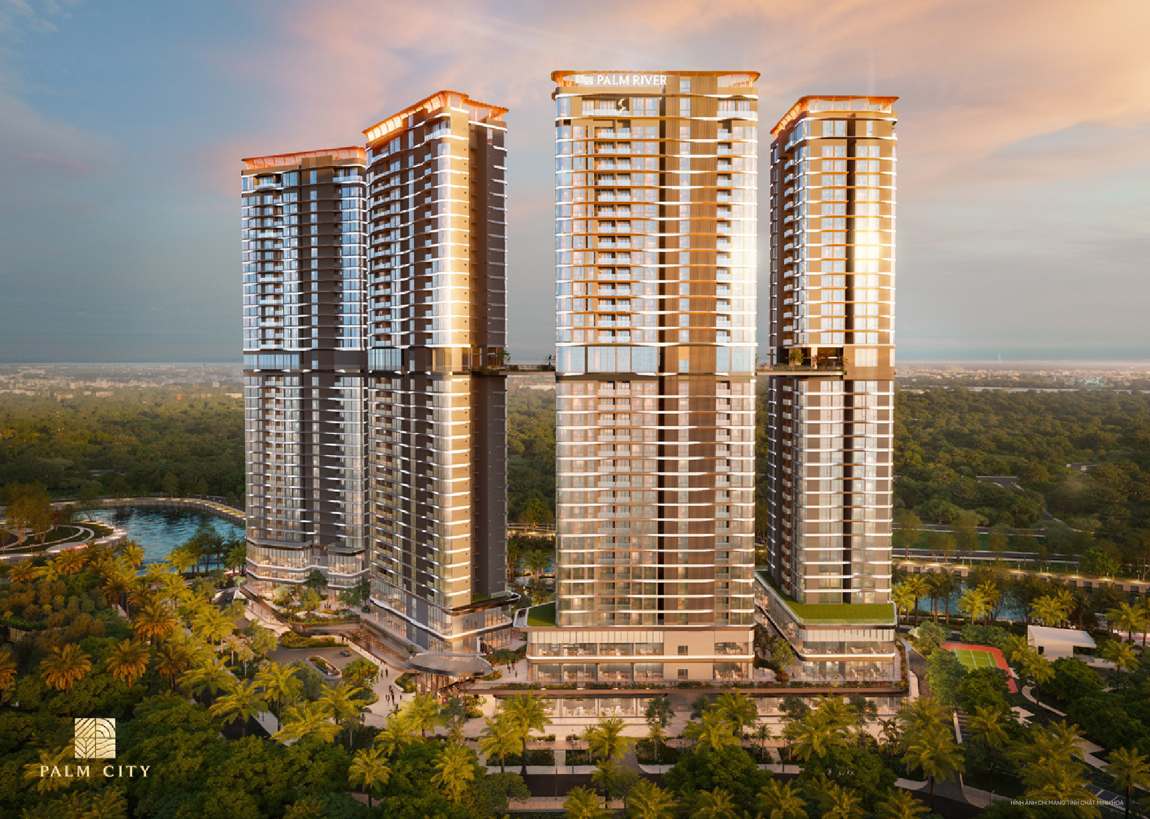
Riverfront apartments in East HCMC — on the Metro & Ring Road corridor, a strong rental location.
View details →Beachtro Tower – Blanca City
Freehold seaside apartments in Vung Tau (Sun Group) — benefiting from port infrastructure & coastal tourism.
View details →Rung Phuong – Eco Retreat
Low-rise eco homes in Long An next to HCMC (Ecopark) — a satellite city, freehold, long-hold store of value.
View details →Want a product matched to your goals & budget? Contact Realtique or email [email protected] for advice.
2026 update. 2026 context: lending rates remain high for some groups and the market is still selective, but aggregated signals (credit reopening, infrastructure accelerating, supply recovering) show the cycle has shifted. Knowledgeable, disciplined buyers hold the advantage in picking good assets before prices move further.
Frequently asked questions
Has HCMC real estate recovered in 2026?
Aggregated signals suggest the market has passed its most difficult phase and is entering a recovery cycle: selective credit expansion, lending rates down to low levels, a strong improvement in launch-ready supply, and infrastructure leading the way. That said, the recovery is uneven across projects and areas — this is for reference only, not investment advice.
If the stock market rises or falls, does property follow?
The two often move in phase because both react to interest rates and liquidity, but they are not identical. Stocks react daily; property has a lag and depends on legal status, infrastructure and local supply-demand. One group of investors selling shares is not the same as capital leaving property.
Do foreign outflows from stocks hurt property?
Net selling on the stock exchange does not mean capital is leaving Vietnam. Registered FDI stays positive and is rotating toward infrastructure, manufacturing and industrial parks. Stocks are only a small pond in the capital picture; most of the money is circulating, not disappearing.
Which areas around HCMC matter in 2026?
2026–2030 is seen as the game of projects on large infrastructure corridors: Thu Thiem, the East (Long Thanh – Metro – Ring Road 3), the South (Hiep Phuoc port – logistics), plus Ring Road 4, Ho Tram – Vung Tau and satellite cities. Prioritise transparent legal status, reputable developers and rentable assets.
Should you buy now or wait?
A quiet market is often when disciplined buyers can pick good products with developer support, rather than chasing at the peak. The principle is to choose assets with clean legal status, anchored to infrastructure, that generate cash flow — and never over-leverage. The right timing depends on your goals and finances.
Disclaimer: this content is for knowledge-sharing and reference about market dynamics, and is NOT financial advice or an investment recommendation. Figures are aggregated market data, illustrative and subject to change. Every investment decision depends on your goals, risk appetite and financial situation; consider consulting an independent financial/legal professional before committing funds.
Need the right project at the right time? Talk to Realtique
Leave your details and a Realtique advisor will call you back within two business hours — a project matched to your goals and budget, anchored to infrastructure, with clean legal status and the right support policy.
📞 Hotline: +84 866 810 689

KC and the Realtique team guide local, overseas Vietnamese and international investors through buying property in Vietnam — safely and in full compliance, from the first viewing to the pink book.