
Da Nang Free Trade Zone: Vietnam’s First FTZ, All 7 Sites and 2026 Progress
Short answer: the Da Nang Free Trade Zone covers about 1,881 hectares, and it is not one continuous area — it is split across seven separate sites in Hai Van ward, Hoa Hiep Bac ward and the communes of Hoa Lien, Ba Na and Hoa Vang. As of August 2026, Site 5 (90 ha, developed by Sun Group) is the only project actually underway; three further infrastructure projects worth over VND 15,025 billion have been approved, and Site 2 formally broke ground on 27 August 2026, ahead of the National Day target the city had reported. Below is the full site map, the status of each one, and — more usefully — how to read the real effect on Da Nang’s property market.
Da Nang Free Trade Zone
Table of Contents
What Is the Da Nang Free Trade Zone?
The Da Nang Free Trade Zone is Vietnam’s first free trade zone, established under Prime Ministerial Decision 1142/QD-TTg dated 13 June 2025. It is a designated functional area with defined boundaries, created to pilot mechanisms and policies that attract high-quality investment in finance, trade, tourism and services.
The detail that confuses most people researching it: the zone is not a single block of land. Its 1,881 hectares are divided into seven separate sites, each with its own designated purpose — some for port logistics, some for high-tech manufacturing, some for commerce, services and resorts. So the question “where is the Da Nang FTZ?” does not have one answer. It has seven.
Strategically, the zone is intended to become a growth pole for central Vietnam and to plug into global supply chains through Lien Chieu deep-water port, Da Nang International Airport and the East–West Economic Corridor.
Where Are the 7 Sites of the Da Nang Free Trade Zone?
The table below covers all seven sites — location, area and designated function, per the approved plan. The areas add up to the full 1,881 hectares.
| Site | Location | Area | Primary function |
|---|---|---|---|
| Site 1 | Hai Van ward | ~100 ha | Port-linked logistics — direct access to Lien Chieu Port and Kim Lien railway station |
| Site 2 | Hai Van ward | ~77 ha | Integrated seaport logistics hub with primary processing for re-export |
| Site 3 | Hoa Hiep Bac ward – Hoa Lien commune | ~500 ha | Logistics, manufacturing and eco commercial-services complex along the Cu De river |
| Site 4 | Ba Na commune | ~559 ha | Manufacturing and logistics complex supporting high technology |
| Site 5 | Ba Na commune | ~90 ha | High-quality commercial, services and resort complex |
| Site 6 | Ba Na commune | ~154 ha | High-quality commercial, services and resort complex |
| Site 7 | Hoa Vang commune | ~401 ha | Digital economy, IT and innovation combined with commerce and services |
Reading this by cluster is easier than reading it by number. The Hai Van cluster (Sites 1, 2 and 3 — roughly 677 ha) is the seaport and logistics spine, hugging Lien Chieu Port in the city’s north-west. The Ba Na cluster (Sites 4, 5 and 6 — roughly 803 ha) mixes high-tech manufacturing with commerce and resort development at the foot of Ba Na mountain. Site 7 (401 ha, Hoa Vang commune) stands on its own as the digital economy and innovation district.
One point worth keeping in mind as a buyer: none of these seven sites sits in the beachfront or riverside districts where international residents actually live. They are production and logistics districts. That distinction matters, and we return to it below.
Progress at Each Site as of August 2026
Site 5 — underway, and the first of the seven. On 27 August 2025, Sun Group (through Ba Na Cable Car Services JSC) started infrastructure work on the 90-hectare Site 5, with total capital of around VND 808 billion and a 70-year operating term. The project is scheduled to become operational from Q4 2027, and connects directly to the Sun World Ba Na Hills resort area.
Three larger infrastructure projects were approved as of 12 June 2026, worth over VND 15,025 billion across roughly 910 hectares:
- Phuong Trang Investment JSC — Site 3, 500 ha, over VND 8,119 billion.
- Thanh Binh Phu My JSC — Site 4, 335 ha, VND 5,338 billion.
- Saigon – Da Nang Investment JSC — Site 2, 75 ha, over VND 1,568 billion.
What changed this month. In its August 2026 priorities report to the central government, Da Nang said it planned to break ground on Site 2 around National Day, 2 September 2026. The ceremony in fact came earlier: on 27 August 2026, in Hai Van ward, the infrastructure project for Site 2 — branded EAGLE FTZ — was formally launched, developed by Saigon – Da Nang Investment JSC across 75 ha with total capital of more than VND 1,568 billion — the first infrastructure project to break ground inside the zone. The city is separately finalising the scheme to adjust and expand the zone’s boundaries. On 5 August 2026, the Da Nang High-Tech Park and Industrial Zones Authority (DSEZA) accepted an application from FTZ Kita Trung Nam Co., Ltd proposing a project at Site 6.
The remaining sites (1, 6 and 7) are still at the survey and feasibility stage, with several investors having signed memoranda of understanding with the city. In short: one site underway, one about to start, two with approved developers, three still being courted.
Why the FTZ Is Tied to Lien Chieu Port
The first three sites all sit in the Hai Van area, and that is deliberate. Site 1 is planned with direct access to Lien Chieu Port and Kim Lien railway station; Site 2 is an integrated seaport logistics hub with primary processing for re-export, tightly linked to Site 1 so goods can move straight to the quay.
This is what separates a free trade zone from an ordinary industrial park. The value of the FTZ model lies in how fast goods move through the port — in, processed or lightly manufactured, then re-exported without clearing full domestic customs. Without a working deep-water port next door, most of the zone’s incentives lose their practical meaning.
More broadly, the city intends to operate the FTZ alongside the Chu Lai Open Economic Zone and Chu Lai Airport, a consequence of Da Nang’s expanded administrative boundaries following the merger with Quang Nam. In parallel, Da Nang is developing an international financial centre (VIFC-DN) and courting investment in semiconductors, artificial intelligence and regional data centres.
What the FTZ Actually Means for Da Nang Property
This is where most commentary goes wrong, so it is worth separating two very different effects.
The first is land-price speculation around the zone’s boundaries. It is the effect everyone reaches for first, and it carries the most risk. Six of the seven sites have not broken ground, and the boundaries themselves are still inside a review scheme. Buying land on a planning rumour at this stage means betting on a line that has not been finalised.
The second is housing and rental demand from the people who come to work. It is slower but far more reliable, and — critically — it can be measured in cash flow rather than in expectation. A functioning FTZ operating alongside an international financial centre draws foreign executives, specialists and investors who stay for months or years. That group rents serviced and premium apartments on annual terms, not nightly ones.
The geography is the key insight here. The FTZ sites sit north-west and inland, while the places those residents actually choose to live, dine and host guests remain the Han riverfront core and the My Khe beach strip. The two poles complement each other rather than compete. For an owner of a beachfront or riverside apartment, the FTZ is a layer of baseline demand that sits outside the tourism season — which is exactly what a rental asset needs, because the low season is when cash flow is weakest.
One detail worth noting for anyone tracking the market: Sun Group is both the developer of the first FTZ project (Site 5) and the developer of the Sun Symphony Residence complex on the Han river. The same group is placing bets at both ends — production and services to the west, and urban riverfront in the centre.
How Foreign Buyers Should Read This
If you are a foreign buyer or a Viet Kieu weighing Da Nang, treat the FTZ as an indicator of long-term rental demand, not as a reason to buy quickly.
Three things to settle before you commit:
- Ownership rights are project by project, not area by area. A project being near the FTZ does not make it “open” to foreign buyers. Each development has its own status — some still have room within the 30% foreign-ownership quota, others sell only through long-term lease agreements. This has to be checked per project, in writing.
- Choose an asset with cash flow, not one waiting for appreciation. Because the FTZ’s real effect travels through rental demand, the assets that benefit most clearly are apartments with professional rental operations — particularly hotel-branded residences, which serve exactly the long-stay professional segment described above.
- Match your holding period to the infrastructure timeline. Site 5 targets operation in Q4 2027; the larger sites are further out still. Any expectation of FTZ-driven rental growth should be measured in years, not quarters.
On financing, one practical note: property loan rates in Vietnam currently run at 12–14% per year, with some floating loans reaching 15–16%. Foreign buyers have very limited access to onshore mortgages in practice, which means the developer’s payment schedule is the real lever, not the bank rate.
Risks and What Is Not Yet Settled
An honest read of the Da Nang FTZ has to include the parts that are still open.
The boundaries are still being revised. Finalising the scheme to adjust and expand the FTZ boundaries was listed among Da Nang’s priorities for August 2026 and has no final outcome yet. Any calculation based on distance to today’s zone edge may need redoing.
A credible expert has proposed a completely different structure. On 27 June 2026, architect Dr Ngo Viet Nam Son proposed relocating the entire Da Nang FTZ to Chu Lai — roughly 100 km south of the city centre — instead of keeping the scattered seven-site model. His reasoning: after the merger with Quang Nam, Da Nang now covers more than 11,800 km², enough space for one contiguous zone, which would also free the older urban core for financial and urban development. This is an expert’s proposal, not a decision by any competent authority, and the seven-site plan remains the plan in force — but it does show the dispersed model is still being debated.
Timelines are plans, not commitments. Site 2 broke ground for real on 27 August 2026, ahead of the 2 September target Da Nang had reported to the central government. On infrastructure of this scale, a few quarters between plan and reality is ordinary — which is precisely why most of the value should be underwritten on existing rental cash flow rather than on a future date.
Frequently Asked Questions
Where is the Da Nang Free Trade Zone located?
It is not in one place. The zone covers about 1,881 hectares split across seven separate sites: Sites 1 and 2 in Hai Van ward; Site 3 across Hoa Hiep Bac ward and Hoa Lien commune; Sites 4, 5 and 6 in Ba Na commune; and Site 7 in Hoa Vang commune.
How many sites does the Da Nang FTZ have and how large is each?
Seven sites: Site 1 about 100 ha, Site 2 about 77 ha, Site 3 about 500 ha, Site 4 about 559 ha, Site 5 about 90 ha, Site 6 about 154 ha and Site 7 about 401 ha — roughly 1,881 hectares in total.
Has construction started on the Da Nang Free Trade Zone?
Partly. Site 5 (90 ha), developed by Sun Group, began infrastructure work on 27 August 2025 with capital of around VND 808 billion and targets operation from Q4 2027. Site 2 (EAGLE FTZ, 75 ha, over VND 1,568 billion, developed by Saigon – Da Nang Investment JSC) formally broke ground on 27 August 2026 in Hai Van ward. The other sites are still in appraisal or investment promotion.
Is the Da Nang FTZ Vietnam’s first free trade zone?
Yes. It was established under Prime Ministerial Decision 1142/QD-TTg dated 13 June 2025 and is the first free trade zone in Vietnam.
Will the free trade zone push up Da Nang property prices?
Two effects need separating. Land speculation around the zone’s edges is the riskier one, since six of seven sites have not broken ground and boundaries are still under review. The more dependable effect is rental demand from foreign executives and specialists coming to work — and that group typically rents premium apartments on the Han riverfront and My Khe beach strip, not next to the production sites. For owners, it represents baseline demand outside the tourism season.
⚠️ Please note: the 2 September 2026 groundbreaking target for Site 2 and the boundary-adjustment scheme are plans and orientations reported by Da Nang to the central government, not final decisions — timelines and boundaries may change. Figures in this article are compiled from press reports and published documents as of August 2026. This is not investment, financial or legal advice — speak with a Realtique advisor to verify the current status of any specific project.
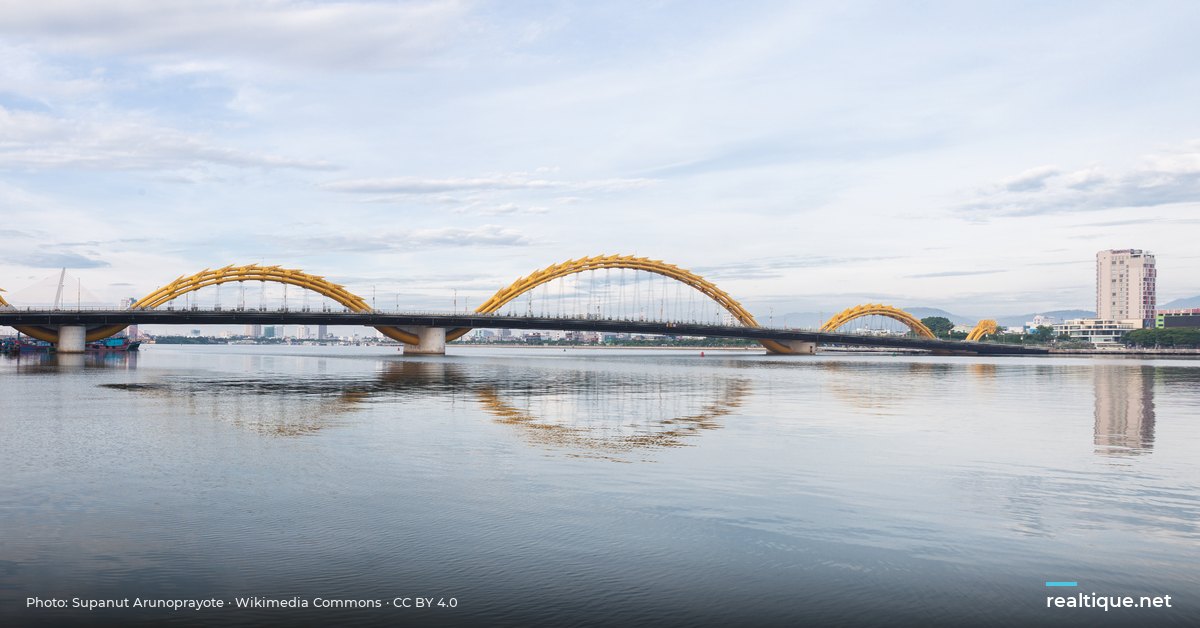
Map: Da Nang People’s Committee (via VietnamNet). Draft-stage map — Site 2 is shown as ~79 ha; the later published figure is ~77 ha.
Which Da Nang projects actually benefit from the FTZ?
Foreign-ownership status and rental performance differ sharply from one project to the next. Leave your details and a Realtique advisor will send you a side-by-side comparison of legal status, remaining foreign quota and actual rental yields for beachfront and riverside projects.
📞 Hotline: +84 866 810 689

KC Pham
KC Pham leads Realtique and has advised Vietnamese and international clients on premium residential property for over a decade.