
Nha Trang Rental Market 2026: 4.6 Million International Arrivals in H1 — Real Yields, Tenant Mix and How Foreigners Can Actually Buy
Updated 28 September 2026
Khanh Hoa province, home to Nha Trang, recorded 4.6 million international arrivals in the first half of 2026, up 66.1% year on year and equal to roughly 84% of its entire 2025 international total. Total arrivals including domestic travellers reached nearly 12 million, with tourism revenue above VND 42,500 billion. The three largest source markets are South Korea, Russia & CIS, and China.
For property buyers the practical answer is narrower than the headline. A realistic long-term rental yield in Nha Trang is 5–6% gross on cost, roughly 4.5–5% net after vacancy, management and rental tax. Figures above 10% circulating in sales presentations are peak-season rates annualised, not achieved full-year returns.
On ownership, the route matters more than the building. Foreigners can hold a 50-year renewable certificate capped at 30% of units per building in eligible commercial housing projects — but several coastal developments in Nha Trang, including phases of Libera Nha Trang, sell to foreigners on a long-term lease contract with no ownership certificate at all. Overseas Vietnamese who still hold Vietnamese nationality face neither limit under the Land Law 2024, effective 1 January 2025.
Nha Trang 2026 — Rental Demand After the Arrivals Wave
Contents
The Numbers: Nha Trang in the First Half of 2026
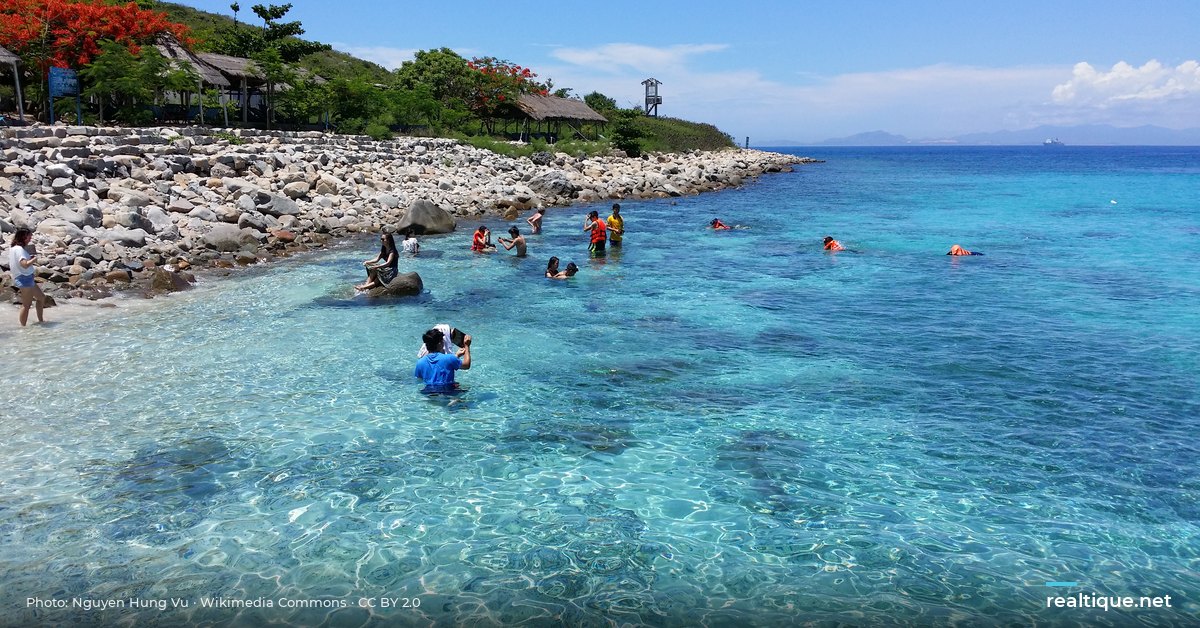
Photo: Nguyen Hung Vu · Wikimedia Commons · CC BY 2.0
Everything below rests on these figures, so they go first:
- 4.6 million international arrivals to Khanh Hoa in H1 2026, up 66.1% year on year;
- That equals roughly 84% of the full-year 2025 international total — close to double the pace;
- Nearly 12 million total arrivals including domestic, with tourism revenue above VND 42,500 billion;
- Largest source markets: South Korea, Russia & CIS, China, in that order;
- The province’s full-year 2026 target: over 6 million international arrivals within 18.8 million total.
One correction worth making, because it is frequently repeated the other way around: Nha Trang is no longer primarily a Russian market. South Korea leads, with Russia & CIS and China following. That distinction matters when choosing a rental product, because those three groups differ sharply in length of stay, budget and location preference.
Where Rental Demand Actually Comes From — and How Nha Trang Differs From Da Nang

Photo: Rawpixel · CC0 1.0
What separates Nha Trang from Vietnam’s other coastal cities is length of stay. Alongside short-stay holiday traffic, the city hosts a foreign community renting by the month and by the year — particularly from the Russia & CIS group, where higher living and energy costs at home make a season or a year in Vietnam materially cheaper. These tenants usually arrive as families and stay long.
That produces a counter-intuitive result: long-stay rental demand does not concentrate on the beachfront. According to agents working the Nha Trang market, long-stay tenants tend to rent inland, inside the city, near schools, hospitals and everyday amenities, rather than paying a premium for a sea view. Sea-view units serve short stays; well-serviced inner-city apartments serve people who live there.
A quick comparison before choosing a product:
- Nha Trang — two distinct demand layers: short-stay along the coast, long-term rental inland. The second layer is steadier and less discussed.
- Da Nang — a larger, older resident expatriate community, but a higher entry price for comparable stock.
- Phu Quoc — heavily short-stay and seasonal; the long-term rental layer is much thinner.
If the goal is steady cash flow, target the long-stay layer. If the goal is seasonal yield, understand that you are entering a hospitality business that needs an operator — not collecting passive income.
Realistic Yields — and Which Numbers to Distrust

Photo: Rawpixel · CC0 1.0
This is where most projections break, so here are the working figures.
The market rate. Long-term apartment rentals in Vietnam’s major tourism cities currently run about 5–6% gross per year on cost. A checkable example: a studio or one-bedroom priced at VND 2–2.4 billion rents for VND 10–12 million per month — roughly 5–6% gross, before tax and costs.
The numbers to distrust. A sub-30 m² unit priced at VND 1.4 billion presented as renting for VND 15 million a month implies nearly 13% gross. No Vietnamese apartment market sustains that; it is either a projection or a peak-season rate annualised. The check is simple and you can run it yourself: search the rental listing portals for the same district and the same unit size, look at asking rents, and more tellingly at how long those listings have sat unlet.
Three costs are routinely omitted:
- Vacancy. No unit rents 12 months a year indefinitely. Budget one to two empty months annually.
- Management, maintenance and furniture depreciation. Short-stay units depreciate far faster than long-let ones.
- Rental tax. Under the rules applying from 2026, an individual whose total annual rental revenue is VND 1 billion or below is exempt. Above that threshold, 5% VAT applies to the entire revenue and 5% personal income tax applies to the portion above VND 1 billion. The threshold is assessed on the individual’s total rental revenue, not per unit.
After those three, a 6% gross yield typically lands around 4.5–5% net. Still competitive against deposit rates — but not the number on the slide.
How Foreigners and Overseas Vietnamese Can Legally Buy in Nha Trang
This is where buyers are most often caught out, because two towers inside the same masterplan can have entirely different legal structures.
For foreign nationals there are two distinct routes:
- Ownership with a certificate. Available in commercial housing projects outside restricted zones that hold written confirmation they may sell to foreigners. Ownership runs 50 years and is renewable, capped at 30% of the units in any one building.
- Long-term lease contract. In a number of coastal developments — including phases of Libera Nha Trang — foreigners receive no ownership certificate and instead sign a long-term lease with the developer. This is a tenancy, not ownership: read the term, the assignment rights, the sublet rights and what happens at expiry before committing.
For overseas Vietnamese, the Land Law 2024, in force since 1 January 2025, opened the door considerably. A person who still holds Vietnamese nationality has housing and residential land rights equivalent to a domestic citizen — no 30% cap and no 50-year limit. A person of Vietnamese origin without current nationality has a narrower scope. For many overseas Vietnamese families the first question is therefore not which unit to buy, but what state their nationality file is in.
Before any deposit in Nha Trang, ask the developer for the written confirmation that the project is eligible for sale and for a clear statement of how that specific tower sells to foreigners. If the answer is verbal only, it is not yet an answer.
Three Risks That Rarely Get Mentioned

Photo: Rawpixel · CC0 1.0
Nha Trang’s rental demand is real and measurable. Three things are still worth pricing in:
- New supply is clustered. Many coastal apartment phases in Nha Trang hand over across 2027–2029. When several thousand units reach the rental market in the same year, rents come under pressure — most of all in the small-unit segment, where stock is nearly interchangeable.
- Source-market concentration. A currency move, a route cancellation or a visa change in one major source market shifts rental demand within a single season. Diversifying visitor mix is the city’s job, not the landlord’s — so the landlord needs a cash buffer.
- Peak-season rents annualised. Many models take a June-to-August rent and multiply by twelve. Always ask for the trailing twelve-month average, and ask the party actually operating the units rather than the sales brochure.
In one line: the arrivals wave is a fact you can verify. The work is turning it into a model built on rents the market is actually achieving rather than rents a brochure projects — and confirming the legal structure of the specific tower before discussing cash flow at all.
Frequently Asked Questions
How many international tourists visited Nha Trang in 2026?
Khanh Hoa province recorded 4.6 million international arrivals in the first half of 2026, up 66.1% year on year and equal to about 84% of its full-year 2025 international total. Total arrivals including domestic travellers reached nearly 12 million, with tourism revenue above VND 42,500 billion. The province targets more than 6 million international arrivals within 18.8 million total for full-year 2026.
What is a realistic rental yield for an apartment in Nha Trang?
About 5–6% gross per year on cost for a long-term let, or roughly 4.5–5% net after vacancy, management costs and rental tax. As a benchmark, a studio or one-bedroom at VND 2–2.4 billion rents for VND 10–12 million per month. Yields above 10% quoted in sales material are typically peak-season rates annualised rather than achieved full-year returns.
Can foreigners buy an apartment in Nha Trang?
Yes, but by two different routes depending on the project. In eligible commercial housing projects, a foreign buyer receives an ownership certificate valid for 50 years and renewable, capped at 30% of the units in any one building. In several coastal developments, including phases of Libera Nha Trang, foreigners buy on a long-term lease contract with the developer and receive no ownership certificate.
Do overseas Vietnamese face the same ownership limits as foreigners?
No, provided they still hold Vietnamese nationality. Under the Land Law 2024, effective 1 January 2025, overseas Vietnamese who retain Vietnamese nationality have housing and residential land rights equivalent to domestic citizens, with no 30% building cap and no 50-year term. People of Vietnamese origin who no longer hold Vietnamese nationality have a narrower scope of rights.
Which countries do most of Nha Trang’s international visitors come from?
In the first half of 2026 the three largest source markets were South Korea, Russia and the CIS, and China, with South Korea in the lead. Nha Trang is no longer predominantly a Russian market as it was in earlier cycles.
Is rental income from a Nha Trang apartment taxable?
Under the rules applying from 2026, an individual with total annual rental revenue of VND 1 billion or below is exempt. Above that threshold, 5% VAT applies to the entire revenue and 5% personal income tax applies to the portion above VND 1 billion. The threshold is assessed on the individual’s total rental revenue across all properties, not per unit.
Is a sea-view unit or an inner-city unit better for rental income in Nha Trang?
It depends on the strategy. Sea-view units serve short-stay holiday demand: higher peak-season revenue, but seasonal volatility and faster wear. Inner-city units near schools, hospitals and daily amenities serve the foreign long-stay community and produce steadier cash flow. For consistent income the long-stay layer is generally the better fit.
Note: Tourism figures are as published by Khanh Hoa tourism authorities for the first half of 2026. Rents and yields quoted are market reference ranges, not guarantees, and vary by building, floor and timing. Content on taxation and ownership is provided for information and does not replace legal or tax advice. Before transacting, request the developer’s written confirmation that the project is eligible for sale and verify the legal structure of the specific tower.
Want the real achieved rents for a specific Nha Trang tower?
Realtique will pull current asking rents for your exact district and unit size, confirm the legal structure of each tower and check remaining foreign-ownership quota — before you model any cash flow.
📞 Hotline: +84 866 810 689

KC Pham
KC Pham advises foreign buyers, overseas Vietnamese and local investors on Vietnam’s coastal markets — checking which tower actually issues a pink book, which one sells to foreigners on a long-term lease, and what the building next door is genuinely renting for before anyone signs a deposit.