
Quiet Luxury: Nguyen-Dynasty-Inspired Design at Mandarin Oriental Da Nang
Mục lục
While many resort projects chase glamour, Mandarin Oriental Da Nang takes the opposite path: Quiet Luxury — beauty that needs no display, cultural depth over visual effect, absolute privacy over crowds. It is a rare estate in Vietnam that pursues this philosophy fully, from master plan to interior detail.
This article walks through the project’s design language: Nguyen-dynasty inspiration, a design investment of over US$12 million, and the international consultants behind each space.
Quiet Luxury — When Silence Is Class
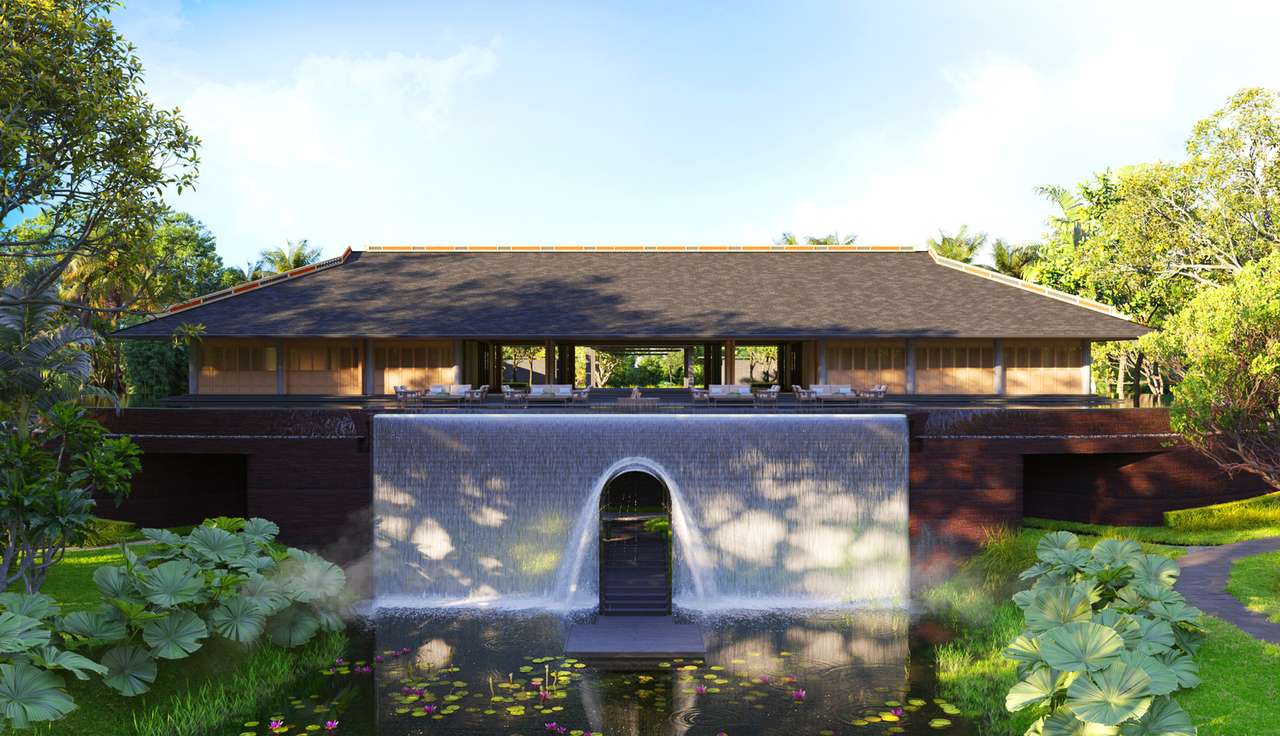
Quiet Luxury is not a marketing slogan here — it is how the project is planned: building density below 22%, with most of the land given to gardens, water and calm. The journey home begins at the entrance waterfall, then follows the Tinh Tam (“calm-mind”) stream — a name that already speaks the spirit of the whole estate.
Each villa is arranged so none looks directly into another; walls, layers of greenery and level changes are calculated so owners can live fully without drawing curtains. Privacy — the hardest luxury to buy in cities — becomes the default standard.
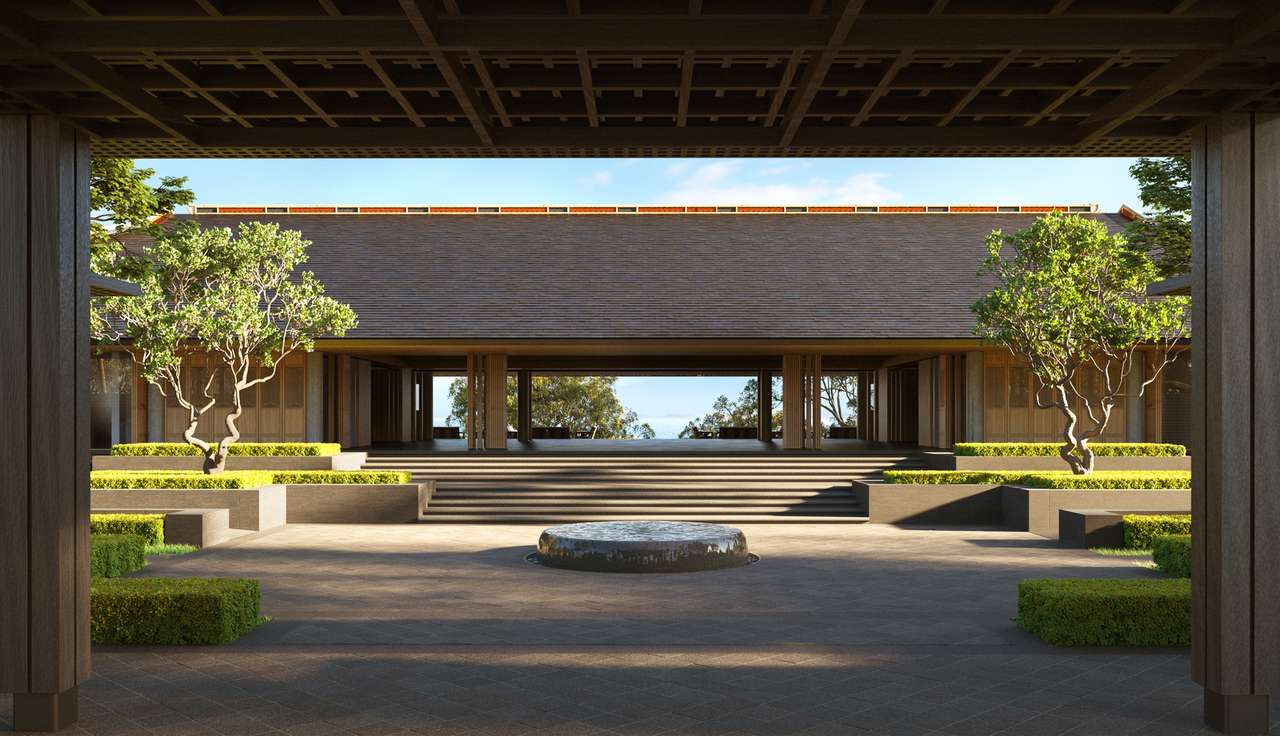
Local materials are prioritised: Marble Mountains natural stone, deep-toned timber, and stylised yin-yang roof tiles — so the buildings seem to grow from this land rather than being imposed on it.
Nguyen-Dynasty Inspiration in Contemporary Form
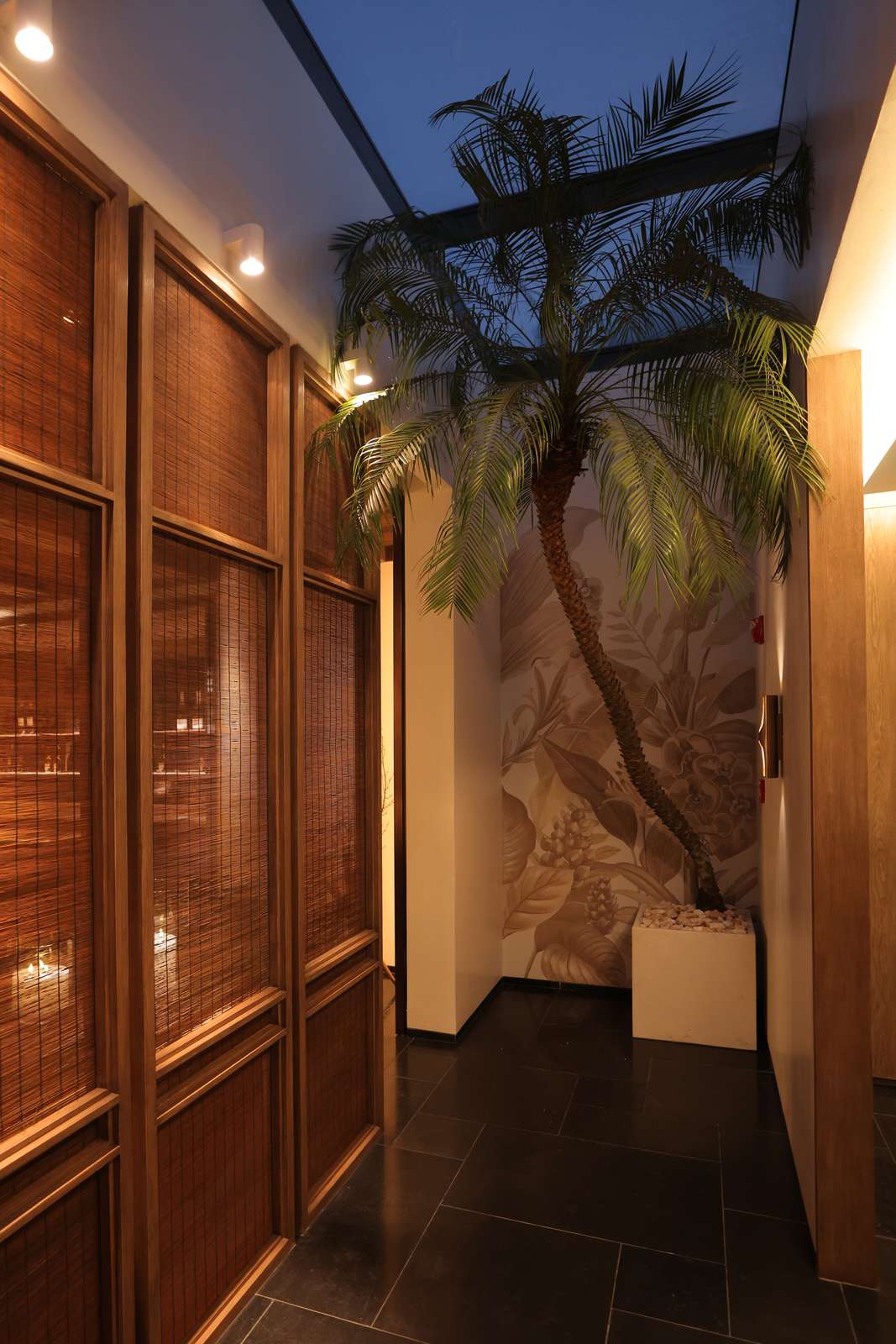
The design language is a dialogue between the architectural heritage of the Nguyen dynasty — the dynasty tied to nearby Hue — and contemporary Western minimalism. Rooflines, motifs and the organisation of courtyards and skylights recall old mandarin residences, tempered by modern lines, large glazing and natural light.
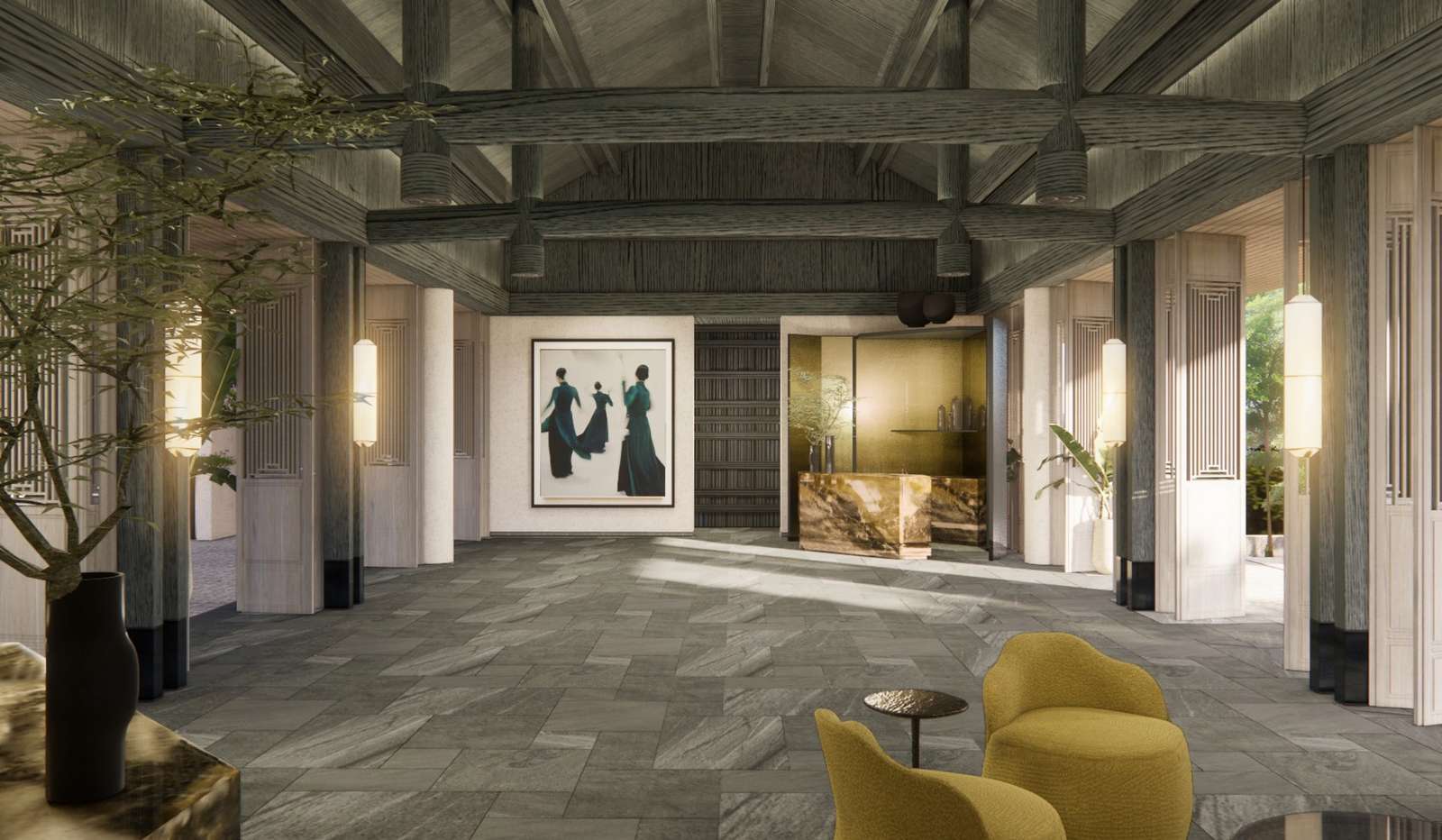
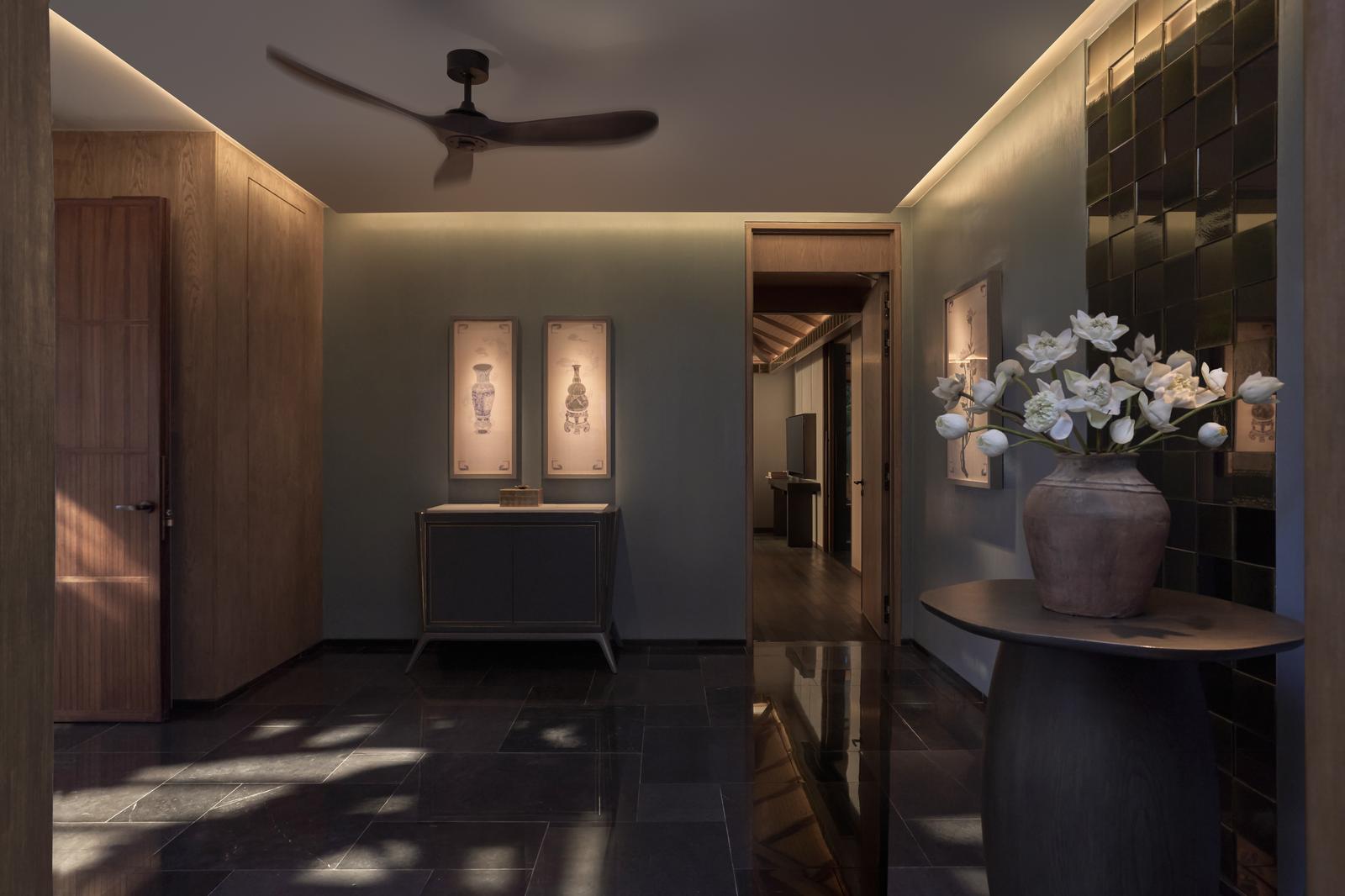
Inside the show villa, this spirit appears in every detail: an artistic photograph of a Hue lady by a citadel gate, handcrafted ceramics, the golden fan emblem of Mandarin Oriental on a muted wall. The space does not display wealth — it tells a cultural story that the owner carries forward.
This is precisely what international property collectors value: an estate with a clear cultural identity will not date with trends.
US$12 Million and a Legendary Consultant Line-up
Developer The Nam Khang invested over US$12 million in design alone — a rare figure for an 82-unit project. It gathered the world’s leading names for each discipline:
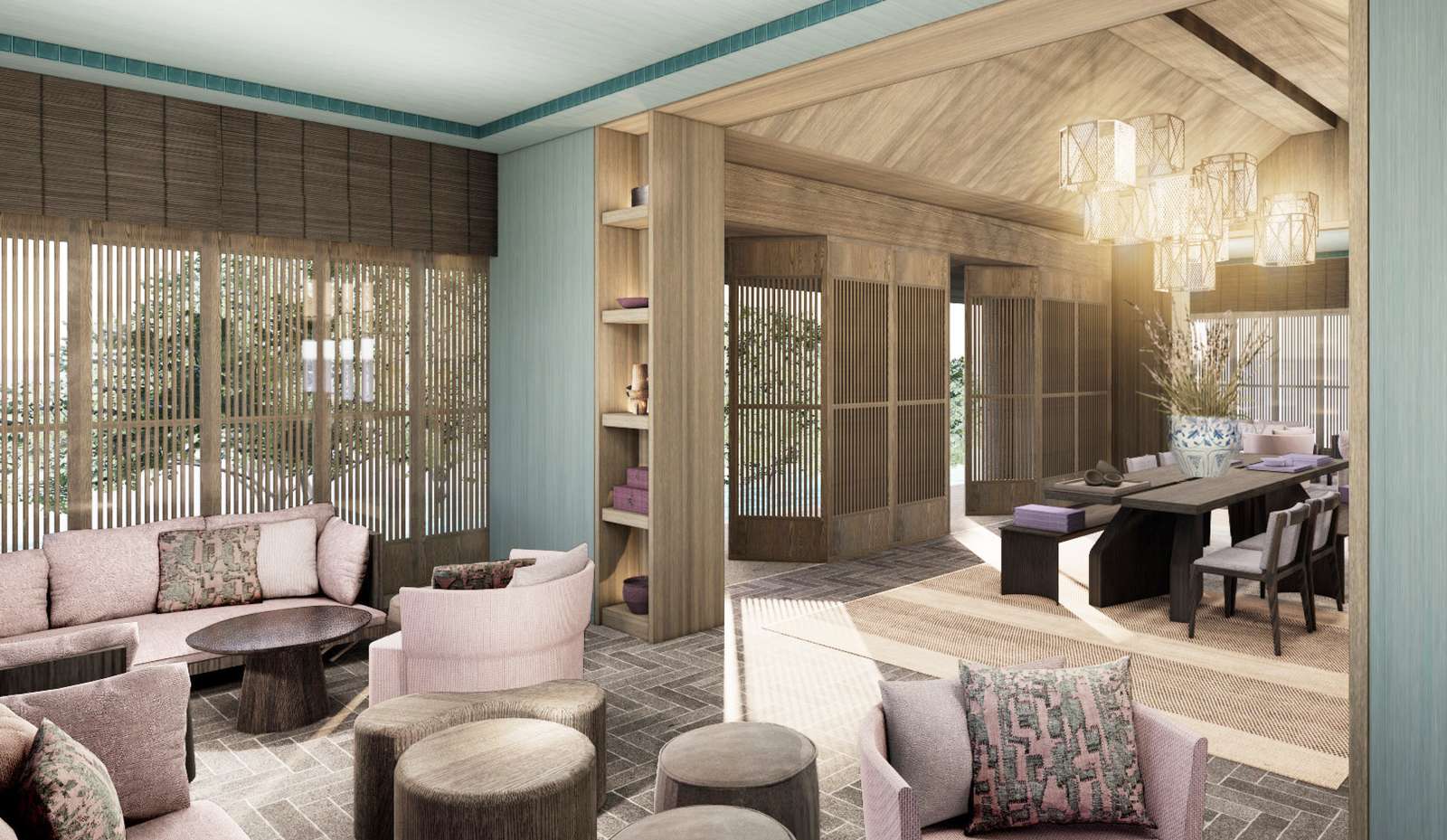
- Yabu Pushelberg (New York) — the interior studio behind globally renowned luxury hotels and boutiques — for interiors;
- Silver Fox (Singapore) — specialists in premium dining spaces — for the restaurant cluster;
- Intaran (Indonesia) — masters of tropical landscape — for the estate’s landscape architecture.
When the best in each field work under one consistent philosophy, the result is a rare, seamless whole — something you can verify yourself at the completed show villa.
A Sense of Place — When a Building Belongs to Its Land
The project’s design notes mention a core idea: inspiration drawn from a sense of place — a building that is truly and uniquely of the very land it stands on. It is a blend of simple yet refined, of the contemporary within a classical poetry, a seasonal meeting of the French architecture once present in central Vietnam and the native Vietnamese soul.
In practice, this means no design here could be lifted onto another beach and keep its meaning. The entrance waterfall echoes the springs of the Marble Mountains; the Tinh Tam stream recalls the Tinh Tam lake of the Hue citadel; each garden is designed by Intaran with the plants of this very coast.
For international collectors — who already own homes in several cities — this uniqueness of place is the reason to add a Vietnamese address to the portfolio, rather than another generic beach villa.
Light, Material and the Emotion of Space
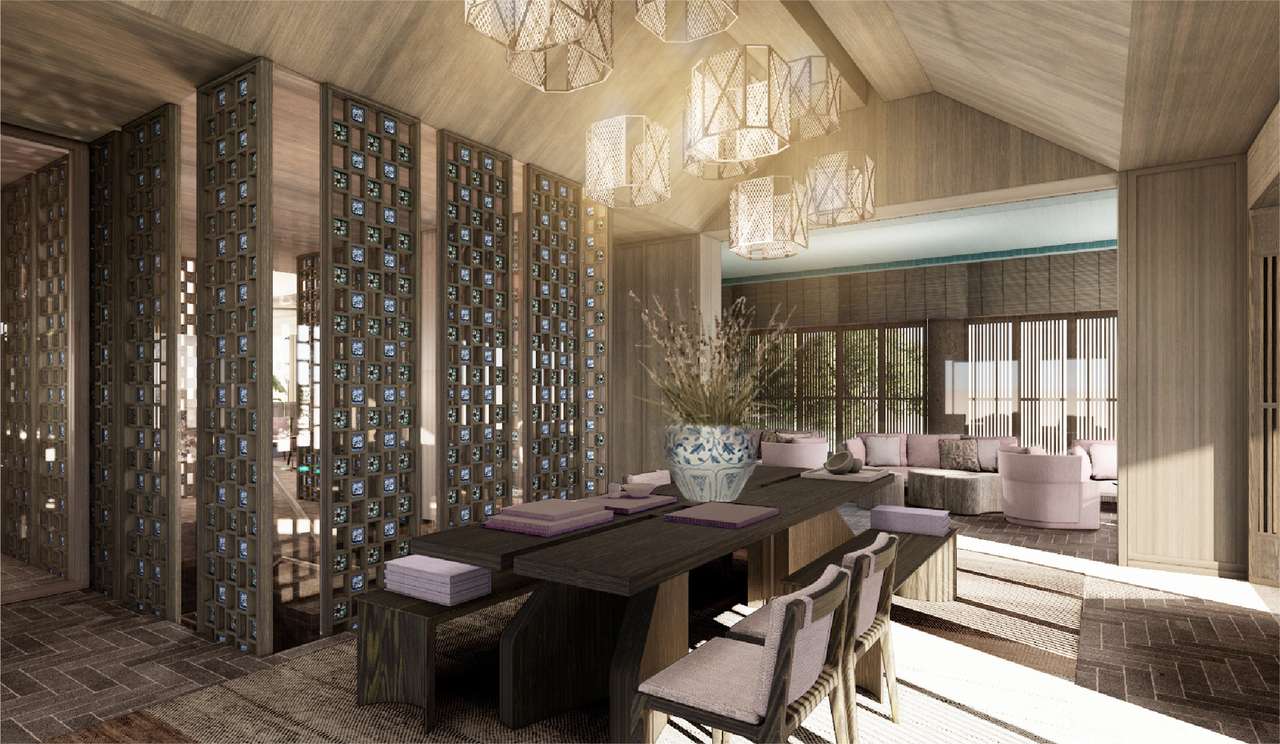
Yabu Pushelberg — the studio behind the most critically praised interiors in New York and Tokyo — brings an earthy palette to the show villa: faded lavender, dark timber brown, natural-stone beige. Light is treated as a material: double-layer curtains filter harsh sea sun into a honeyed glow, and accent lighting highlights local ceramics and artworks.
Sound is designed too: buffer gardens and stone walls absorb noise, so standing in the courtyard you hear only water and leaves. Mandarin Oriental’s signature scent — familiar to the group’s global guests — will be present in the arrival spaces.
This harmony of the senses is something a render cannot convey — and the reason we always advise Realtique’s clients: visit the show villa, sit for ten minutes, and let the space persuade you.
Why Cultural Identity Protects Value
Design trends date; cultural identity does not. A villa styled to a passing fashion can look tired within a decade, while a home rooted in a place and a heritage tends to age into character. Mandarin Oriental Da Nang is deliberately built on the second principle: the Nguyen-dynasty references, the Tinh Tam stream, the Marble Mountains stone and the native planting tie the architecture to this specific coast in a way that cannot be copied elsewhere. For international collectors who already own homes in several cities, that uniqueness of place is precisely the reason to add a Vietnamese address — not another interchangeable beach villa, but a house that could only exist here.
There is a commercial dimension to this too. An estate governed by a unified design and operating charter — where facades, landscape and common areas are held to one standard — protects every owner’s value against the erosion that comes when individual owners renovate at cross purposes. Quiet Luxury, in other words, is not only an aesthetic; it is a value-preservation strategy.
The US$12 Million Design Spend in Perspective
Spending over US$12 million on design for an 82-unit project is unusual, and it signals intent. It buys three things a buyer can actually feel: a coherent whole, because the interior, dining and landscape teams worked under one philosophy rather than in silos; a verifiable standard, visible in the completed show villa; and a durability of detail, because world-class studios specify materials and construction that survive a harsh coastal climate. When Yabu Pushelberg, Silver Fox and Intaran each lead their discipline, the seams between spaces disappear — and it is precisely those seams, in lesser projects, where quality and value leak away over time.
How Quiet Luxury Reads on the Resale Market
Understated design is sometimes assumed to appeal to a narrow taste, but the opposite is true on the luxury resale market. A neutral, natural-material palette is the easiest canvas for a new owner to make their own, and — unlike heavily-styled interiors — it rarely dates. Buyers of ultra-prime homes increasingly favour exactly this restraint, valuing craftsmanship, privacy and cultural depth over spectacle. A villa built to that sensibility, and governed by an estate charter that keeps facades and landscape to one standard, is therefore easier to sell and holds its value more reliably than a more fashionable but more fragile alternative.
The estate charter deserves emphasis, because it is where design philosophy becomes financial protection. By holding the exterior, landscape and common areas to a unified standard, the charter prevents the value erosion that occurs when individual owners renovate at cross purposes. Every owner’s villa is protected by the discipline applied to all of them — a quiet, structural safeguard that a standalone villa outside a managed estate simply does not have.
In the end, the design story here is also an investment story. A home rooted in place and heritage, finished to a world-class standard and protected by a unified estate charter, is one that ages into character and holds its value — the opposite of a fashionable interior that dates within a decade. This is why the over-US$12-million design spend and the Quiet Luxury philosophy matter to a buyer’s bottom line, not just their eye. The most reliable way to feel it is to sit inside the completed show villa; Realtique can arrange a private visit in Da Nang whenever suits you.
Related Articles
Learn more about Mandarin Oriental Da Nang:
- Overview: Mandarin Oriental Da Nang 2026: Complete Guide to the Branded Beachfront Villas
- The Mandarin Oriental Brand Behind the Da Nang Branded Villas
- Mandarin Oriental Da Nang Location: Non Nuoc, 3 UNESCO Sites & 5 Golf Courses
- The 3 Villa Collections at Mandarin Oriental Da Nang: Specs & Floor Plans
- Inside the Mandarin Oriental Da Nang Show Villa: 17 Real Photos
- Mandarin Oriental Da Nang Dining & Amenities: Restaurants, Bars, Kid’s Club
- The Spa & Wellness at Mandarin Oriental Da Nang: The Healing Valley
- The Nam Khang & Mandarin Oriental Da Nang Progress: Groundbreaking to Launch
For a tailored assessment of Mandarin Oriental Da Nang — comparing specific villas, lines and positions against your goals, with the price list and, for foreign buyers, the exact 50-year leasehold mechanism as soon as they are released — a Realtique advisor is ready to help, at no cost to the buyer, from first enquiry through to a secure handover.
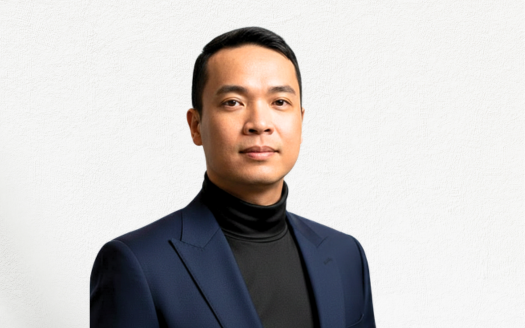
KC Pham
KC Pham is the CEO of Realtique, advising local and international clients on Vietnam’s most exclusive properties.
Get the latest The Residences at Mandarin Oriental, Da Nang information
Leave your details and a Realtique advisor will call you back within 2 working hours — latest pricing, payment policy, and available units.
📞 Hotline: 0866 810 689