
Mandarin Oriental Da Nang Location: Non Nuoc, 3 UNESCO Sites & 5 Golf Courses
Mục lục
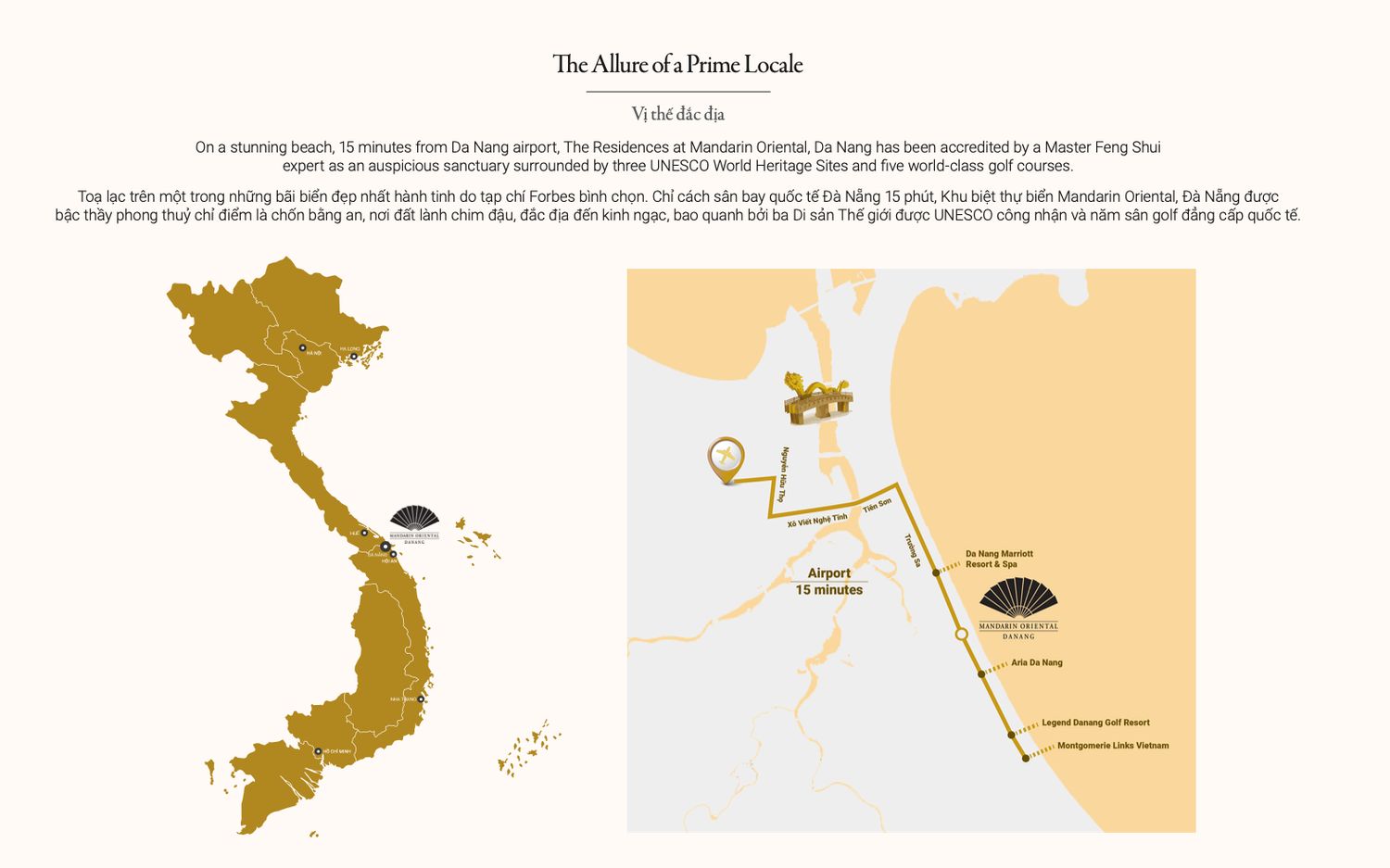
In resort real estate, location is not just coordinates — it is the entire surrounding ecosystem that shapes the living experience and the asset’s value over time. Mandarin Oriental Da Nang holds one of the rarest positions on the central coast: the Forbes-honoured Non Nuoc Beach, 15 minutes from the international airport, set among three UNESCO World Cultural Heritage sites.
This article analyses each layer of the project’s locational value — from connectivity and natural scenery to the geomancy assessed by a master expert.
Non Nuoc Beach — Truong Sa Street, Ngu Hanh Son
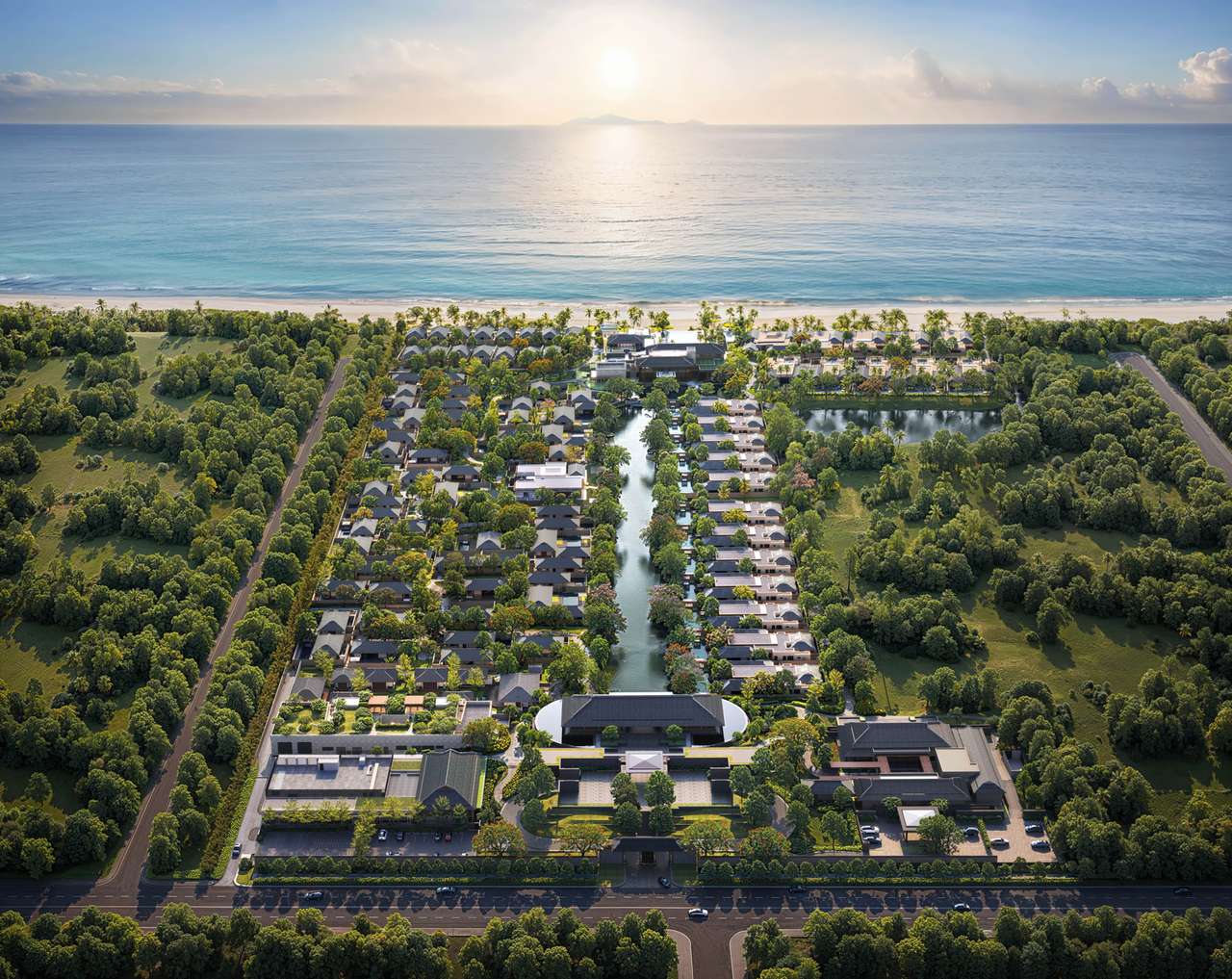
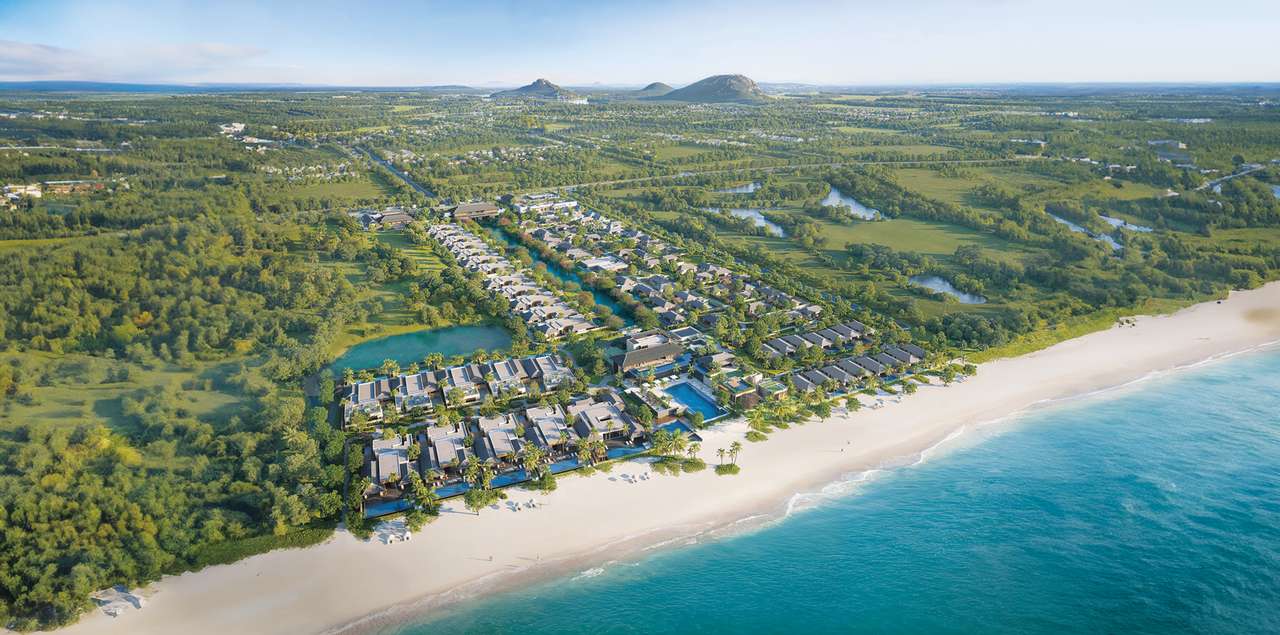
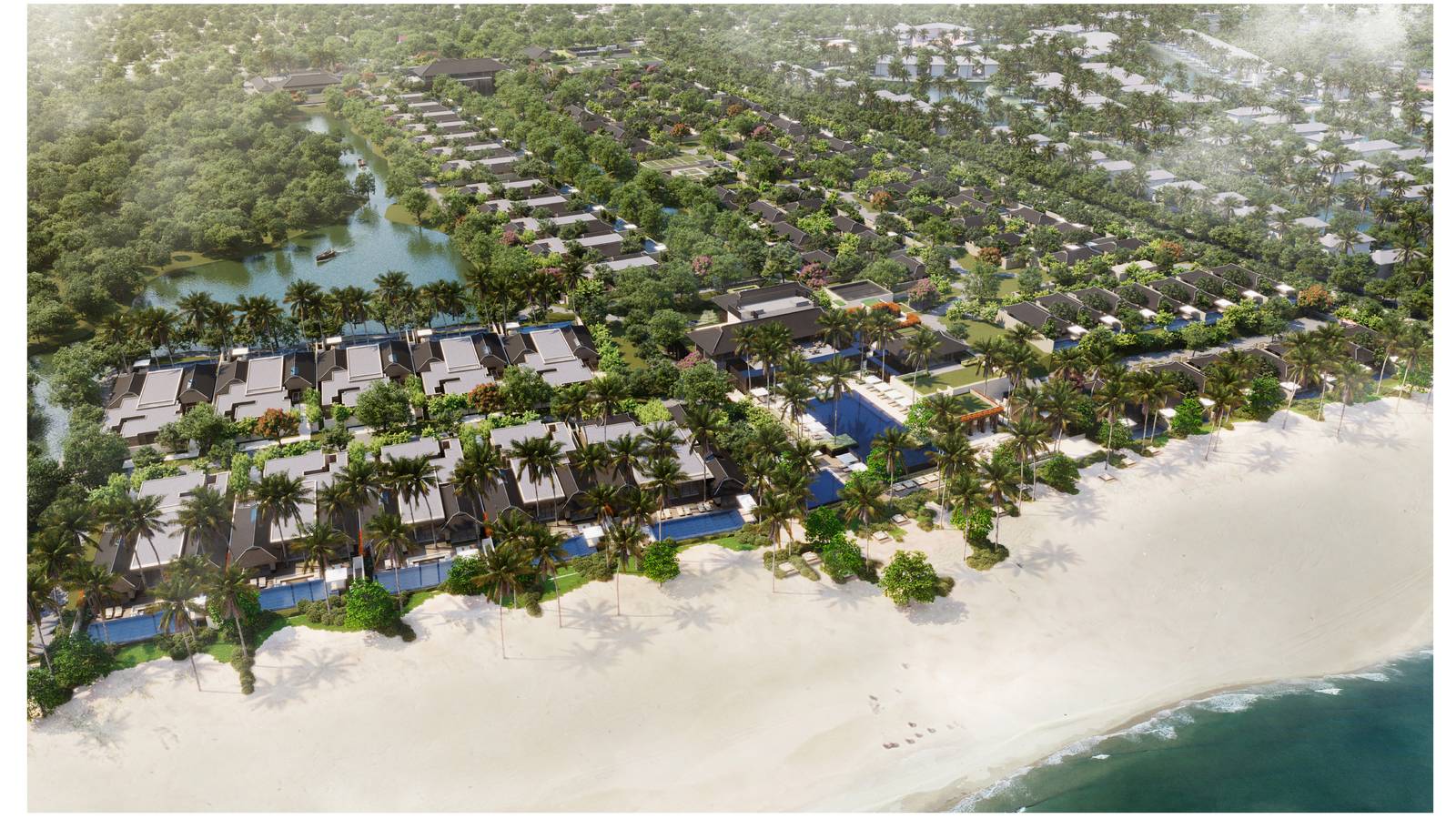
The project sits on Truong Sa Street, Ngu Hanh Son ward — Da Nang’s most beautiful coastal road and home to Vietnam’s most prestigious international resorts. The Non Nuoc Beach in front of the project was named by Forbes among the most beautiful beaches on earth: fine white sand, a gentle gradient and calm waves year-round.
Behind the project stands the Marble Mountains (Ngu Hanh Son) — a limestone massif tied to a traditional stone-carving craft village. This mountain-backed, water-facing land has been assessed by a master geomancer and recognised as auspicious ground — a factor Asian buyers value highly when choosing where to settle and store wealth.
The 15-minute distance to Da Nang International Airport creates a dual advantage: close enough for convenient travel, far enough to preserve total tranquillity — true to the project’s Quiet Luxury spirit.
Among Three UNESCO Sites and Five Golf Courses
Few resort projects worldwide lie within a short drive of three UNESCO World Cultural Heritage sites at once: Hoi An old town (~30 min), the My Son sanctuary (~60 min) and the ancient capital of Hue (~90 min via the Hai Van tunnel). For international guests on longer stays, this is a depth of cultural experience no ordinary beach can match.
Golf lovers have five international-class courses nearby — including courses along the Non Nuoc – Hoi An axis designed by legends such as Greg Norman and Colin Montgomerie, regular hosts of regional tournaments. Golf in the morning, spa in the afternoon, beachside dining in the evening — a complete resort rhythm year-round.
Da Nang is also central Vietnam’s infrastructure hub: the Da Nang – Quang Ngai expressway, seaports, and expanding international hospitals and schools — a foundation for an ever-growing international resident community.
Location From an Investment Perspective
Direct beachfront land in Da Nang is almost exhausted — especially along Truong Sa, where international operators are densely present. A new project with 17.2 hectares of beachfront land and building density below 22% is very hard to replicate.
Da Nang tourism has recovered strongly post-pandemic, with steadily rising international arrivals driving demand for luxury stays. A resort villa operated by the world’s No.1 brand on the city’s finest beach sits at the intersection of two demand streams: personal holiday use and premium rental exploitation.
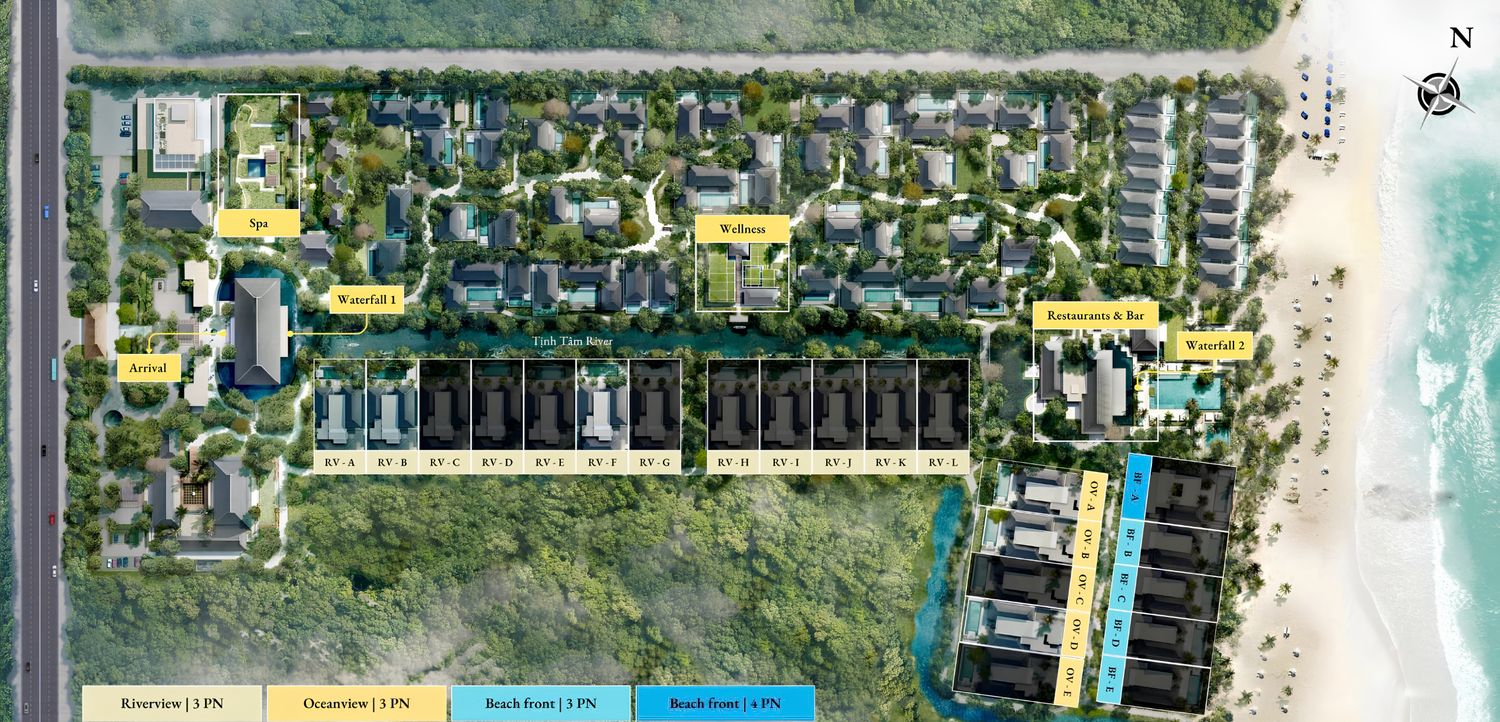
To review a detailed location map of each villa versus the sea, and the sun/wind orientation of each plot, contact Realtique for guidance on the best-fit villa.
Infrastructure — International Airport & Central Tourism Axis
Da Nang International Airport currently operates direct flights to major Asian hubs: Seoul, Tokyo, Singapore, Bangkok, Hong Kong, Taipei — meaning owners from these cities can breakfast at home and dine by Non Nuoc Beach the same day. The international terminal continues to expand to serve double-digit annual growth.
By road, Truong Sa Street connects straight to central Da Nang (~20 min) and Hoi An old town (~20 min the other way) — the project sits at the midpoint of central Vietnam’s most valuable tourism axis. The Da Nang – Quang Ngai expressway and the coastal route to Hue complete the regional network.
Da Nang is also being positioned as a regional financial centre with special incentive mechanisms — a soft-infrastructure story that could materially reset the city’s premium property values over the coming decade.
A Day of Living in Non Nuoc
Picture the rhythm this location allows: a barefoot dawn walk on an empty Non Nuoc beach; a morning round of golf next door or remote work in the resort’s quiet library; lunch at a restaurant using vegetables from the organic garden; an afternoon taking the children to Hoi An to make lanterns; and an evening spa treatment in the healing valley.
At weekends, a two-hour radius opens up to the ancient capital of Hue, hot mineral springs, or new coastal golf courses. This density of experience is something very few resort locations in Asia can fit into a single address.
For those new to the area, the best way to feel it is a site visit. Realtique arranges project tours combined with a Non Nuoc – Hoi An day experience.
The Central-Coast Growth Corridor
Da Nang anchors one of Vietnam’s most compelling coastal growth corridors, and location value at Non Nuoc should be read in that context. The city combines an international airport with rising direct connectivity across Asia, a maturing hospitality cluster along Truong Sa, a UNESCO-heritage hinterland that keeps international demand diversified beyond pure beach tourism, and a policy ambition to become a regional financial centre. When an airport gateway, a heritage-tourism draw and a services-economy story reinforce one another, the result tends to be durable demand for premium housing and stays — the foundation on which branded coastal value is built.
For a buyer, the practical takeaway is that Mandarin Oriental Da Nang is not an isolated bet on one beach; it is a stake in a corridor whose several catalysts each add resilience. Even if any single driver moves slowly, the others continue to support the location. Held over the medium to long term, that diversification of demand is part of what makes a scarce, freehold, brand-operated villa here more than a lifestyle purchase.
Beachfront Scarcity Along Truong Sa
Direct beachfront land on Truong Sa is effectively finished. The road is already lined with the region’s most established international resorts, and there is simply no comparable new frontage to bring to market. A fresh 17.2-hectare beachfront site, held at a building density below 22% and operated by the world’s No.1 brand, is close to unrepeatable. Scarcity of this kind tends to protect value through cycles, because the supply of genuine alternatives cannot expand. For owners, it also underpins the rental case: a limited stock of brand-operated beachfront villas on Da Nang’s finest beach faces demand from a global luxury-travel market that continues to grow.
Airport Connectivity as a Value Driver
For a resort asset, airport connectivity is not a convenience footnote — it is a core value driver. Da Nang International Airport’s direct links to Seoul, Tokyo, Singapore, Bangkok, Hong Kong and Taipei mean an owner from any of those cities can reach the villa within a single travel day, and the same links feed the international guest demand that underpins premium rental. As the terminal expands to serve double-digit annual growth, the catchment of both potential owners and potential guests widens with it. A villa fifteen minutes from that gateway, on the city’s finest beach, is positioned at the exact meeting point of accessibility and exclusivity.
Layer on the heritage hinterland — Hoi An, My Son and Hue within an easy drive — and the demand becomes unusually diversified. Where a pure beach destination depends on sun-and-sand seasonality, Non Nuoc draws culture travellers, golfers and wellness seekers across the calendar. That breadth of demand is precisely what gives a location durability through cycles, and it is a large part of why beachfront scarcity here translates into resilient, rather than merely fashionable, value.
Taken together, these location layers — a Forbes beach, a 15-minute airport, three UNESCO sites, five golf courses, assessed geomancy and a diversified, year-round demand base — are why Non Nuoc is not simply a pretty address but a durable one. For a buyer weighing a decade-long hold, that durability is the point: a location whose value rests on several reinforcing drivers is far more resilient than one dependent on a single trend. Realtique can map each villa’s specific position against the sea, sun and wind so you choose the plot that best captures this location’s value.
Related Articles
Learn more about Mandarin Oriental Da Nang:
- Overview: Mandarin Oriental Da Nang 2026: Complete Guide to the Branded Beachfront Villas
- The Mandarin Oriental Brand Behind the Da Nang Branded Villas
- Quiet Luxury: Nguyen-Dynasty-Inspired Design at Mandarin Oriental Da Nang
- The 3 Villa Collections at Mandarin Oriental Da Nang: Specs & Floor Plans
- Inside the Mandarin Oriental Da Nang Show Villa: 17 Real Photos
- Mandarin Oriental Da Nang Dining & Amenities: Restaurants, Bars, Kid’s Club
- The Spa & Wellness at Mandarin Oriental Da Nang: The Healing Valley
- The Nam Khang & Mandarin Oriental Da Nang Progress: Groundbreaking to Launch

Grace Le
Grace Le is a Branch Manager at Realtique, supporting bilingual clients across premium developments.
Get the latest The Residences at Mandarin Oriental, Da Nang information
Leave your details and a Realtique advisor will call you back within 2 working hours — latest pricing, payment policy, and available units.
📞 Hotline: 0866 810 689