
Prime Land Isn’t Sold on the Open Market: The Can Gio Bridge Land-Swap & a Property Project’s Legal Process (2026)
Table of contents
Many large investors share the same misconception: that with enough money they could buy outright a landmark building or a plot of prime land in the city centre. In Vietnam it rarely works that way. The most valuable land and buildings are usually public land — to own them, you must go through State-level mechanisms rather than an ordinary sale.
The two prime plots earmarked to help pay for the Can Gio bridge are a textbook example. We use this case to explain what a large developer must do to secure prime land, and — once they have it — how the legal chain unfolds, from 1/2000 and 1/500 zoning to fire-safety approval, construction permits and sales eligibility, and how long each step takes.
Why Prime Land Isn't Sold Like a Townhouse
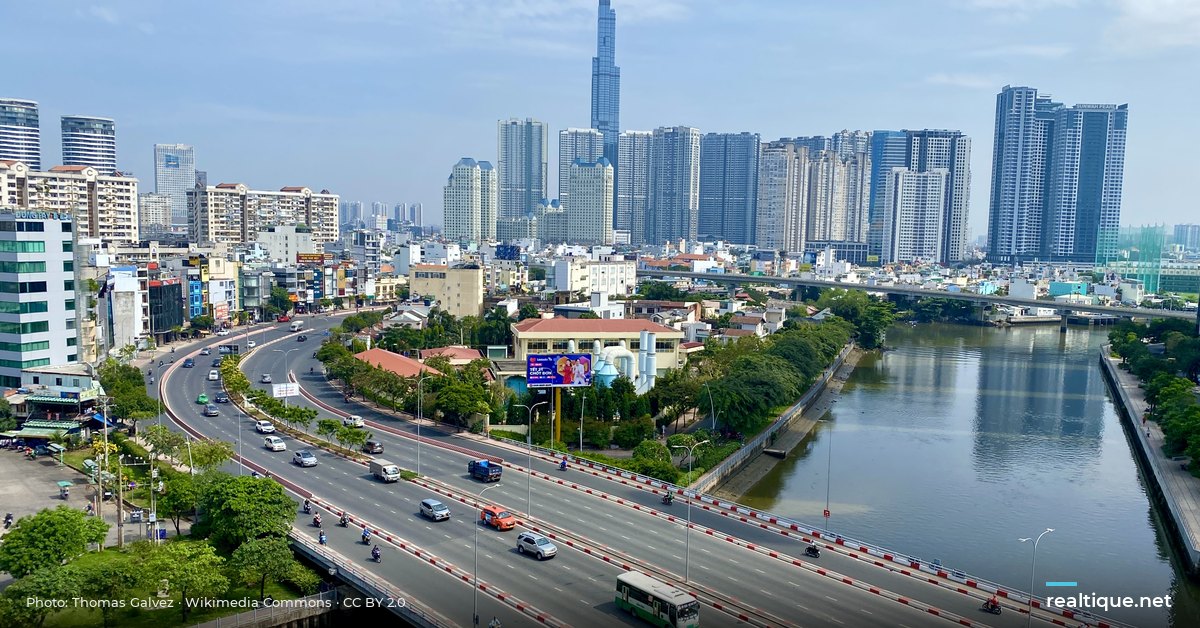
Both 2-4-6 Hai Ba Trung and 8-12 Le Duan are recovered public land, handed back to HCMC management. Such assets are not on the open market; the State only transfers development rights through three main routes:
For foreign investors the bar is even higher: they cannot own land directly, only access land-use rights through a company and a specific project; central or coastal sites also require a national-level defence-security review. That is why even a very wealthy individual struggles to “buy outright” a landmark asset.
How the BT / Land-Swap Mechanism Works
The Can Gio bridge is delivered under a BT (Build-Transfer) model worth about VND 10,816bn, by Masterise Infrastructure Can Gio. Instead of cash, the State plans to pay most of it in prime land — the two plots above, worth ~VND 7,533bn, equal to about 69% of the contract; the rest is paid from the budget within two years of completion.
This is the “land-for-infrastructure” model, once suspended and now revived and applied in HCMC under the amended PPP Law and Resolution 98/2023 on special mechanisms. It lets the city obtain major infrastructure without spending budget upfront, in exchange for high-value land. For the wider infrastructure picture, see the HCMC master plan toward 2050.
Beyond BT: What Other Forms Are There?
BT is only one of many mechanisms. Broadly, how the State partners with the private sector to build infrastructure, and how a developer obtains land, are two separate families of forms — here is the full picture:
In short: group ① answers “under which contract to build infrastructure”, while group ② answers “where to get the land”. The Can Gio bridge combines both — a BT contract (group ①) paid in land (group ②).
How a Large Investor Acquires Prime Land
- Step 1 — Enter through the right “door”. Identify how the plot is offered: land-use-right auction, investor-selection bidding, or BT land-swap. Each has its own dossier and eligibility criteria.
- Step 2 — Prove capacity. Equity, delivery track record, an efficient land-use plan. For a land-swap project, also the capacity to build the infrastructure in return.
- Step 3 — Valuation & financial obligations. The land is independently valued; the investor meets the financial obligation (or offsets it against the infrastructure value in the BT contract).
- Step 4 — Approval at the competent level. For high-value central land, the decision usually sits with the provincial/city People’s Committee — sometimes requiring ministry and Prime-Minister input — which is what “national level” really means.
After Acquiring Land: The Legal & Construction Process
Owning the land is only the start. To turn it into a project cleared for sale, the developer must go through the following chain — with realistic estimated timing:
Implications for Buyers and Investors
- Understand why projects are “slow”. Years from land to launch is normal — most of the time is in 1/500 zoning, land valuation and financial obligations, not construction.
- Prioritise clean legals. When buying, check the 1/500 plan, land allocation decision, construction permit and (for off-plan) the eligibility-to-sell letter plus bank guarantee. For the overall market, see our Vietnam real estate market 2026 report.
- Ride the infrastructure. Mechanisms like the Can Gio land-swap show capital and value shifting to the south of the city — home to mega-projects such as the Can Gio sea-reclamation township. Foreign buyers should confirm eligibility early via our property buying guide.
Frequently Asked Questions

KC Pham
KC Pham is the CEO of Realtique, advising local and international clients on Vietnam’s most exclusive properties.